Record Collector
 UK
UKEngland's monthly with high quality articles, discographies & record reviews. Mostly featuring rock & pop artists/groups, but touches on country, soul etc. A very important information source. (rojaro)
Back Issues index (D-discography, F-feature, I-interview, R-review):
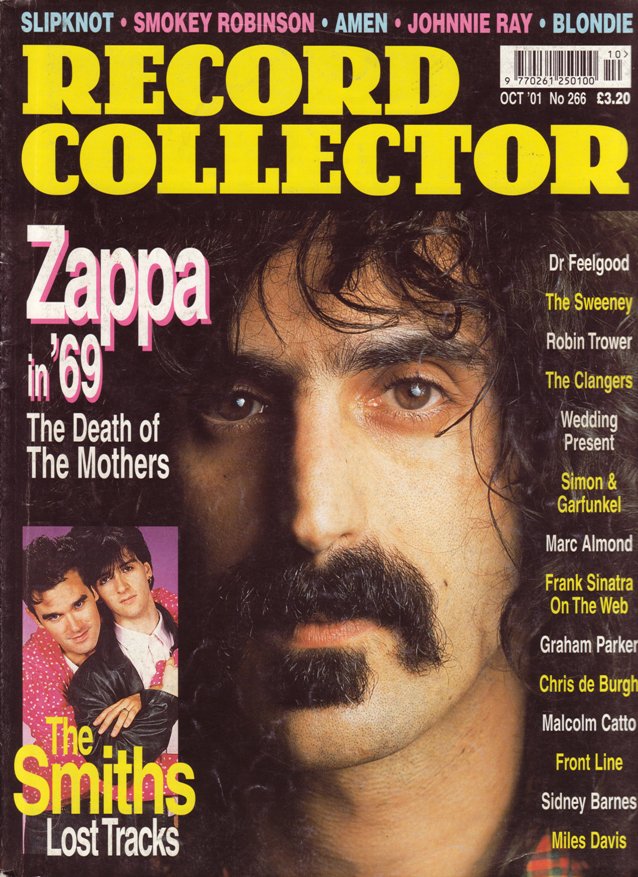
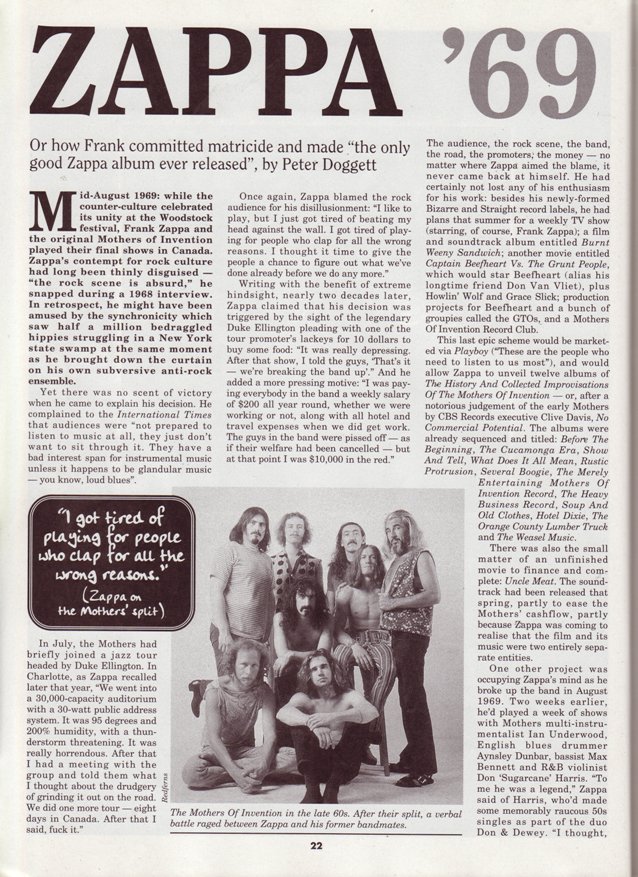
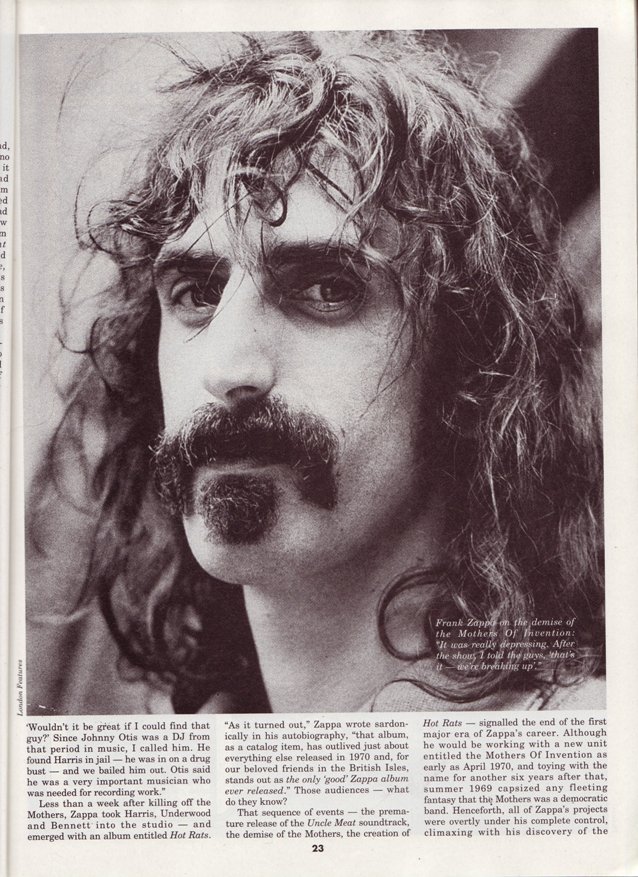
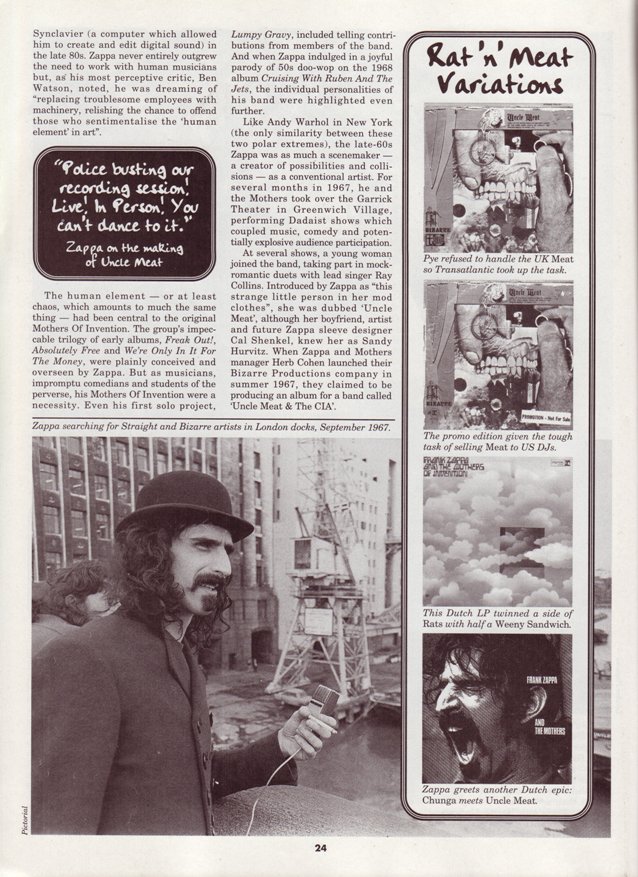
F & D (61); D (93); F & D (118); D (165); D (171); D (177); D (191); R (199); R (205); F (251); R (266); F & I (362)

1982 July
No. 35
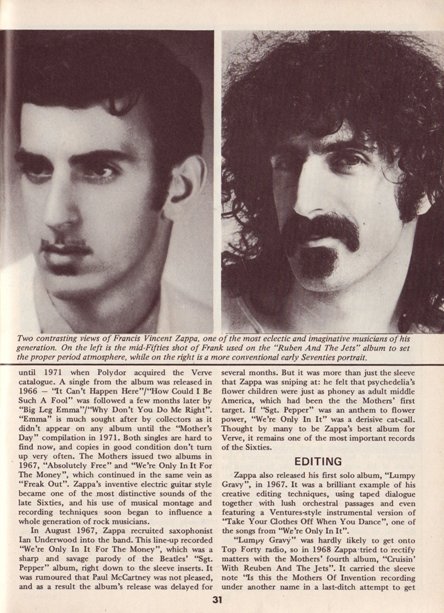
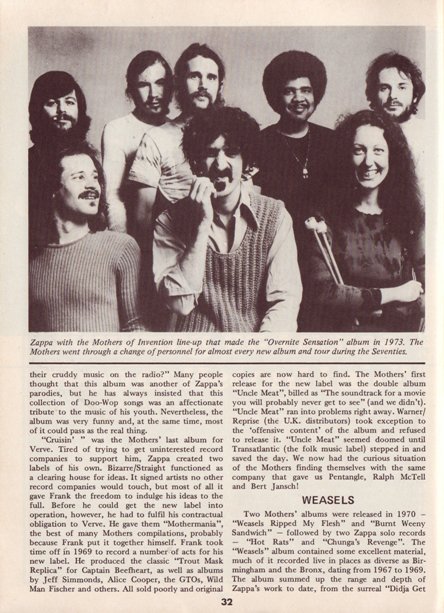
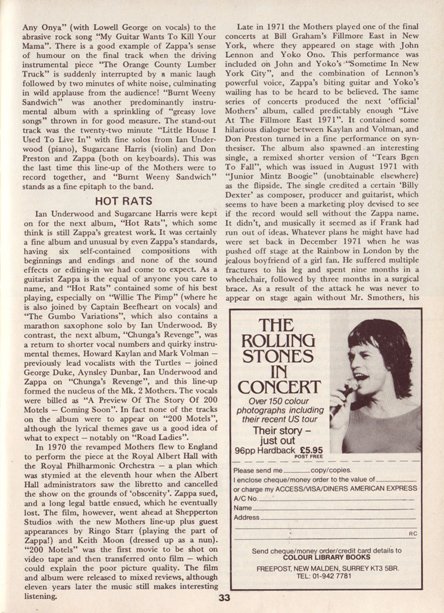
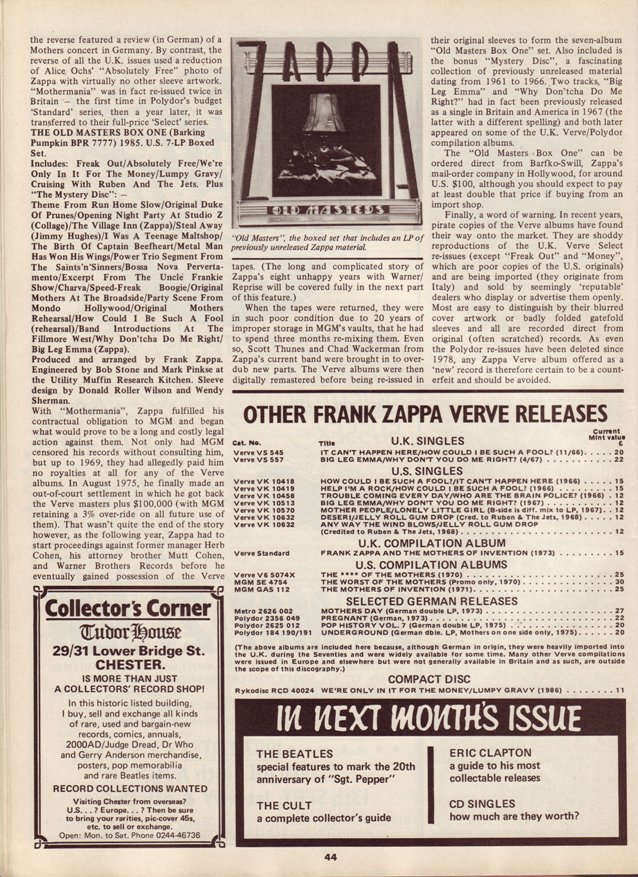
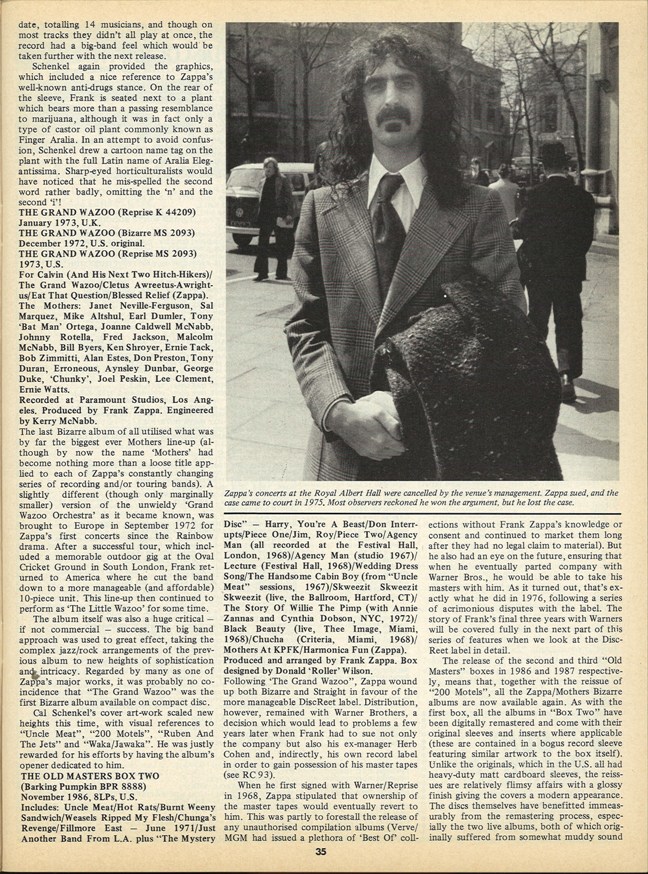
Frank Zappa: many of his earliest releases
are now attracting high prices
By Stuart Penney, pp 29-36
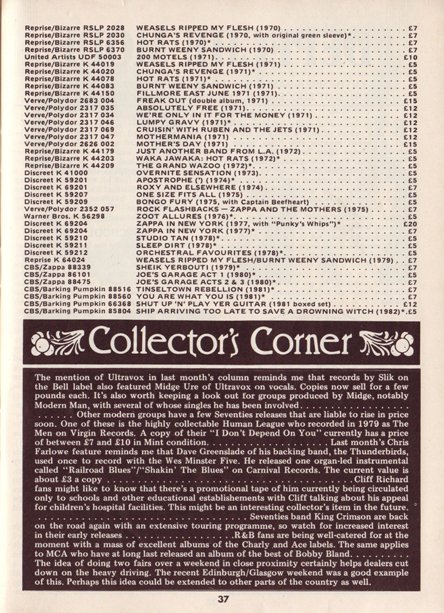
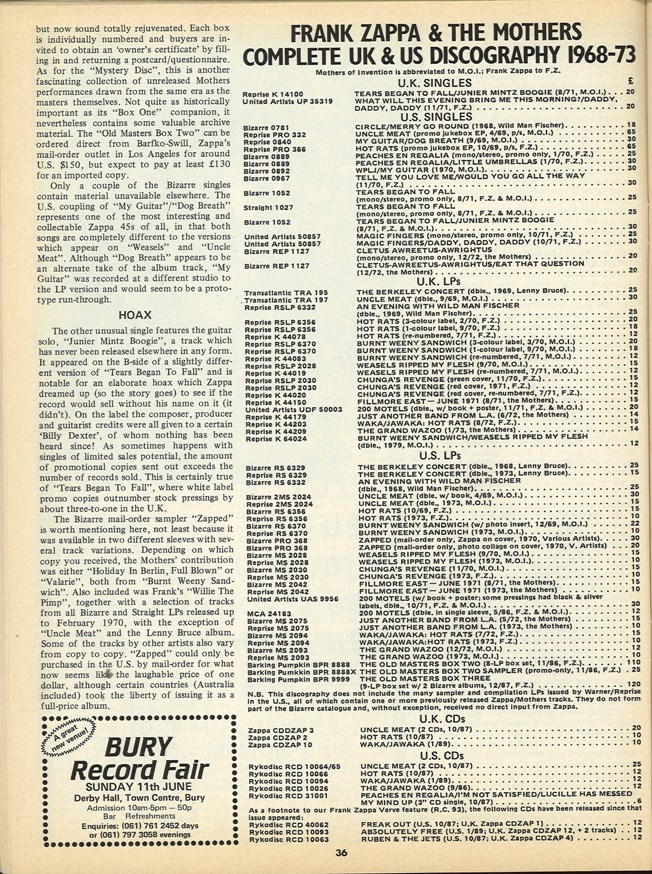
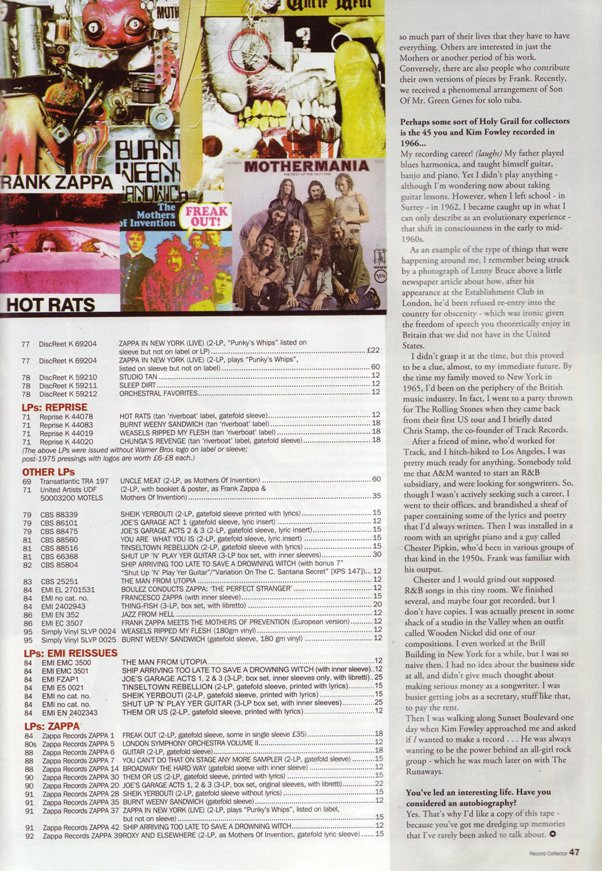
Complete U.K. Frank Zappa and the Mothers of Invention discography
+ values
pp 36-37



1984 September
No. 61
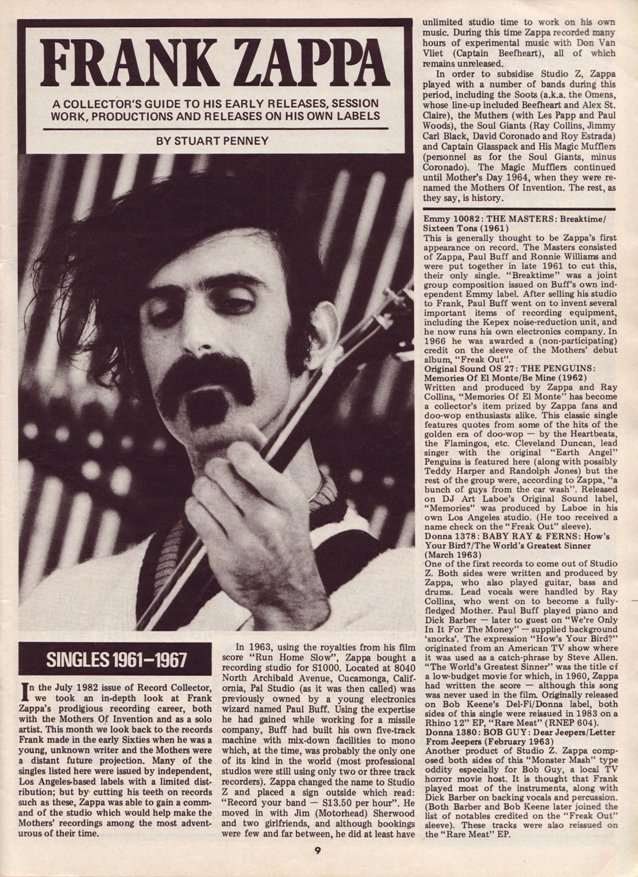
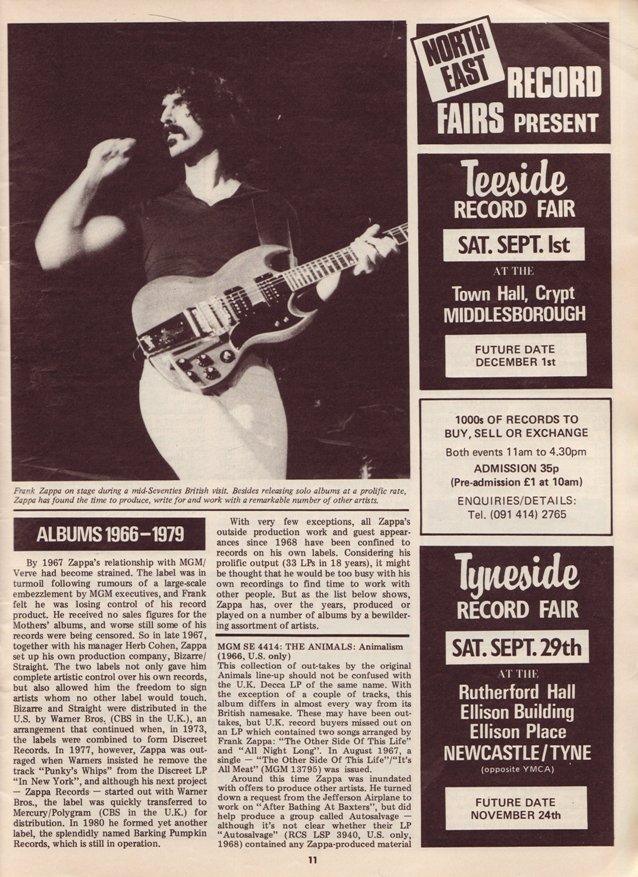
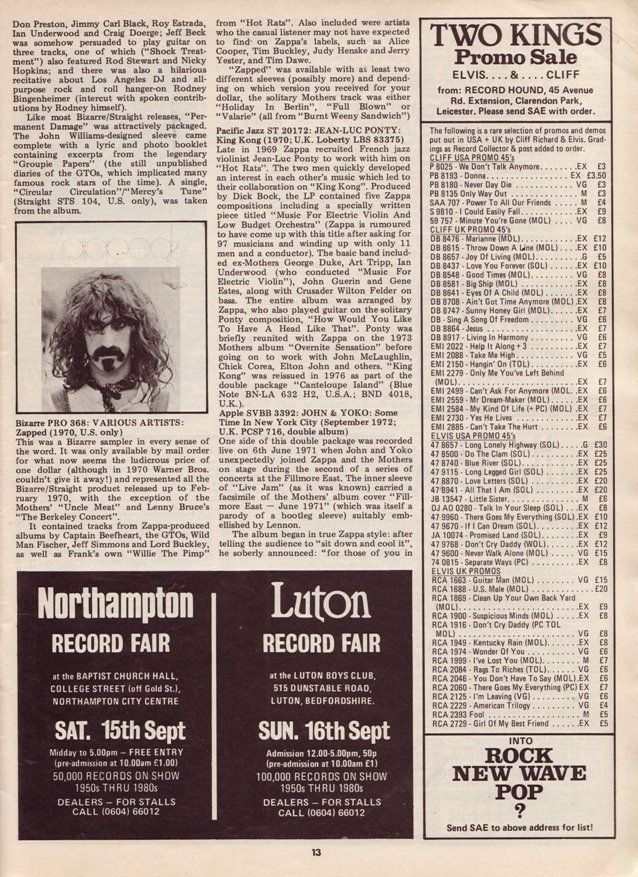
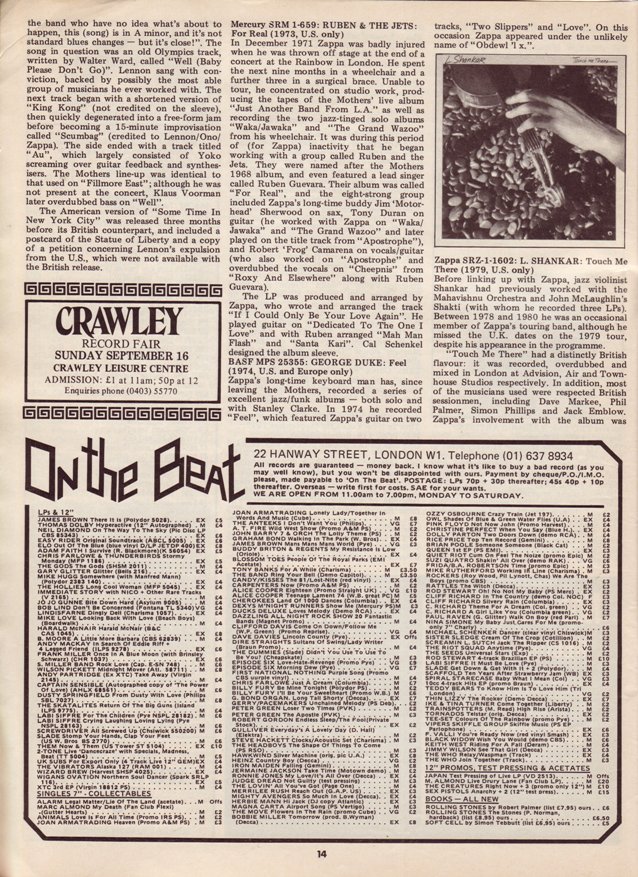
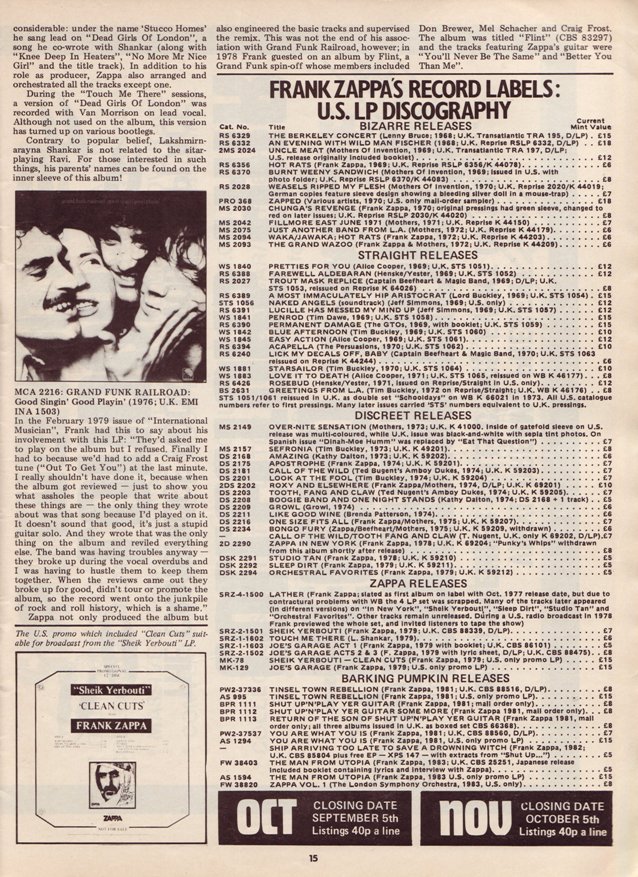
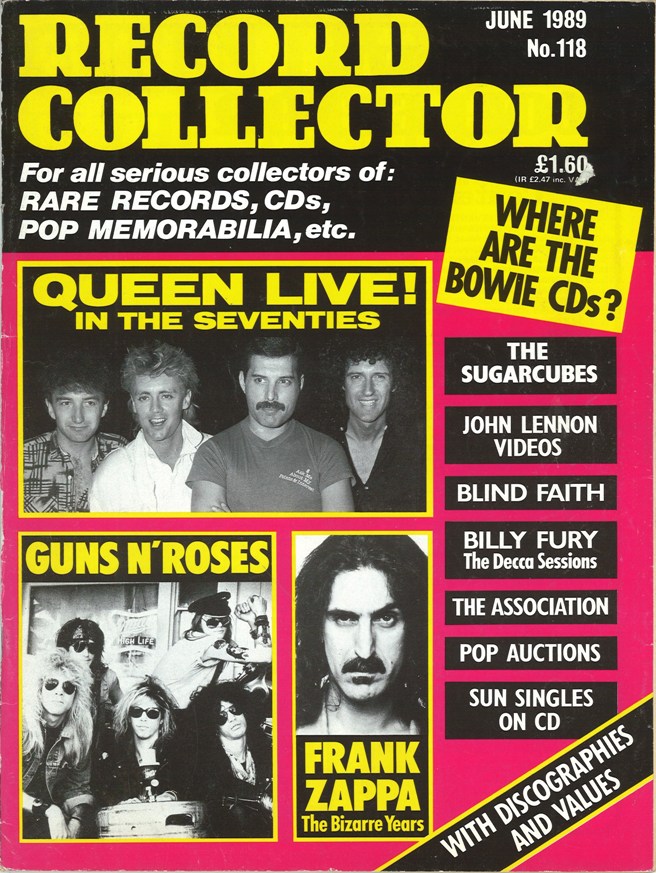
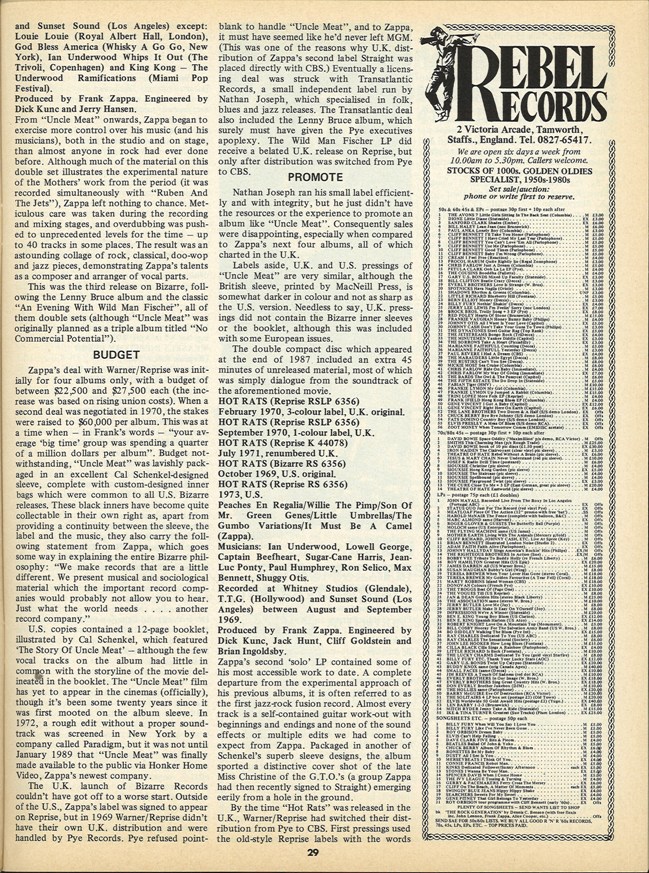
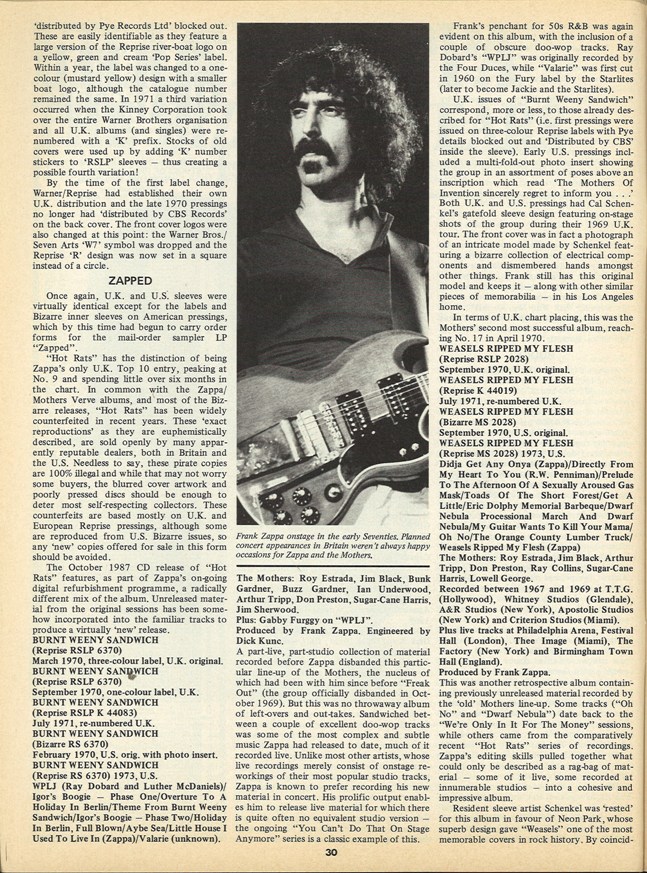
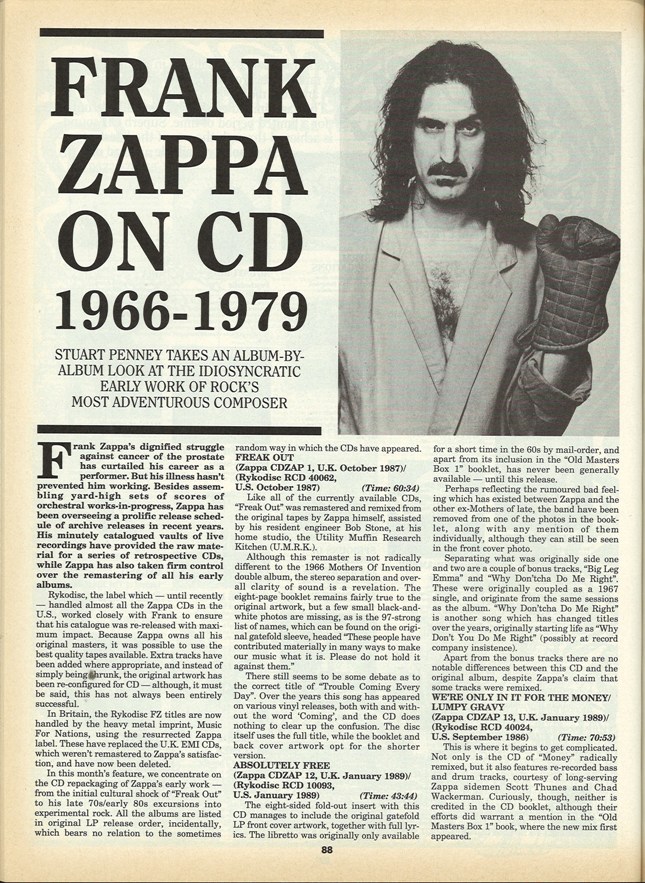
Frank Zappa
A collectors guide to his early releases, sessions work, production
and releases on his own labels
By Stuart Penney, pp 9-15






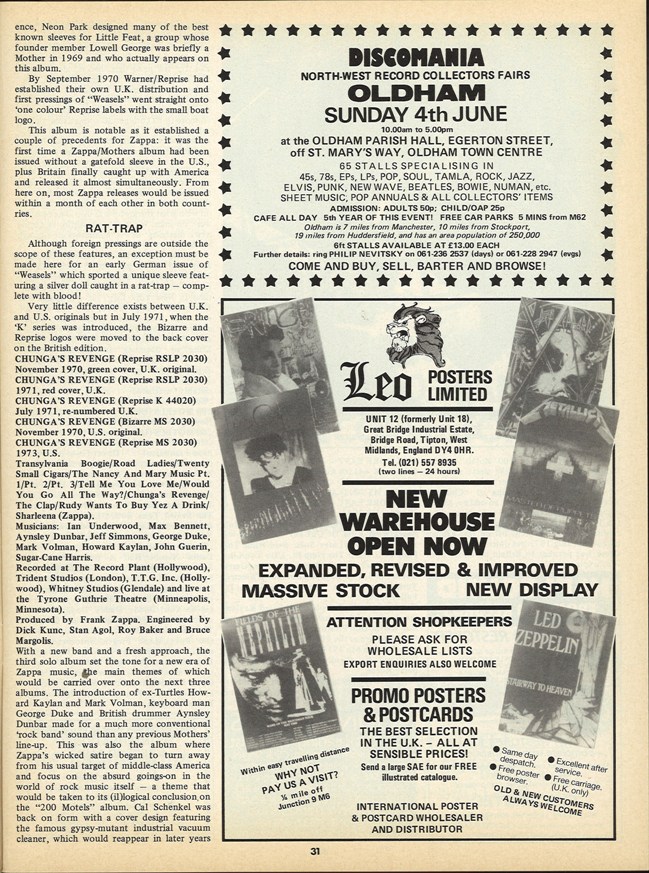
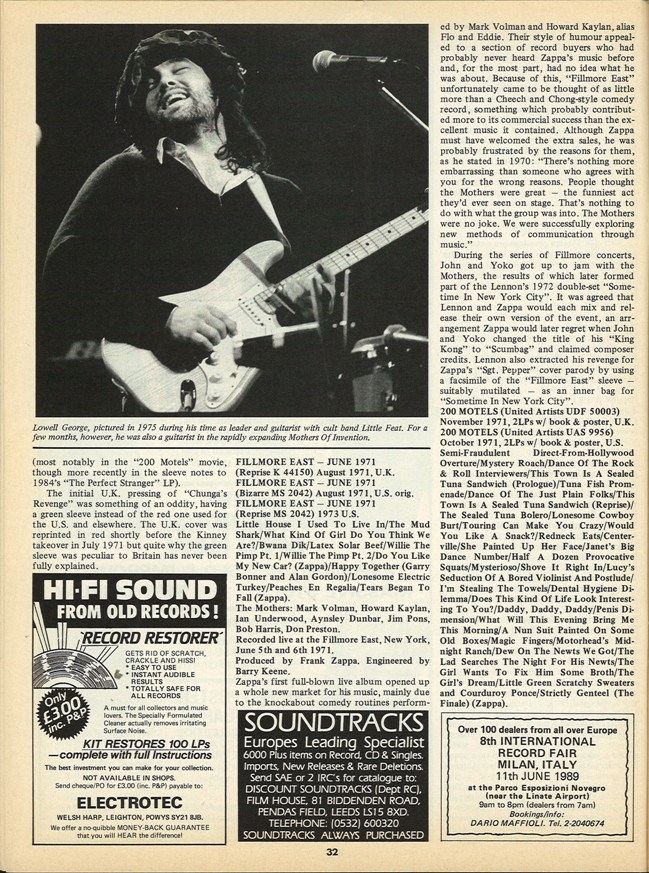
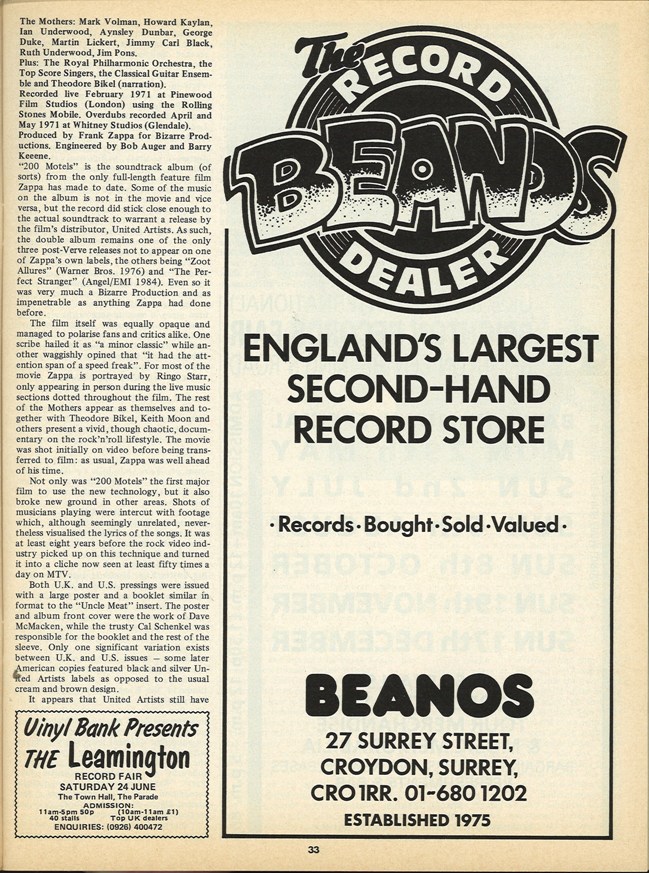
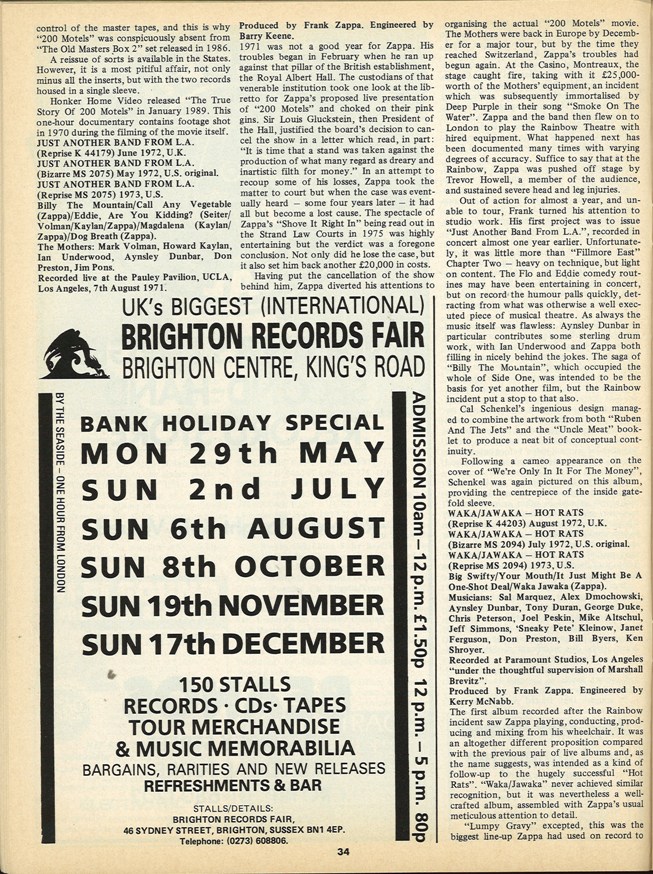
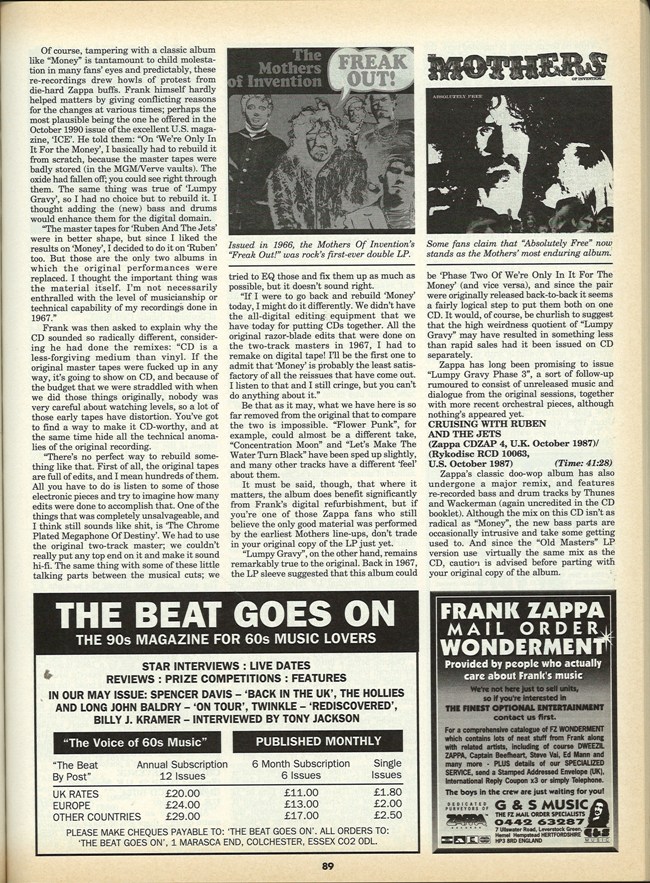


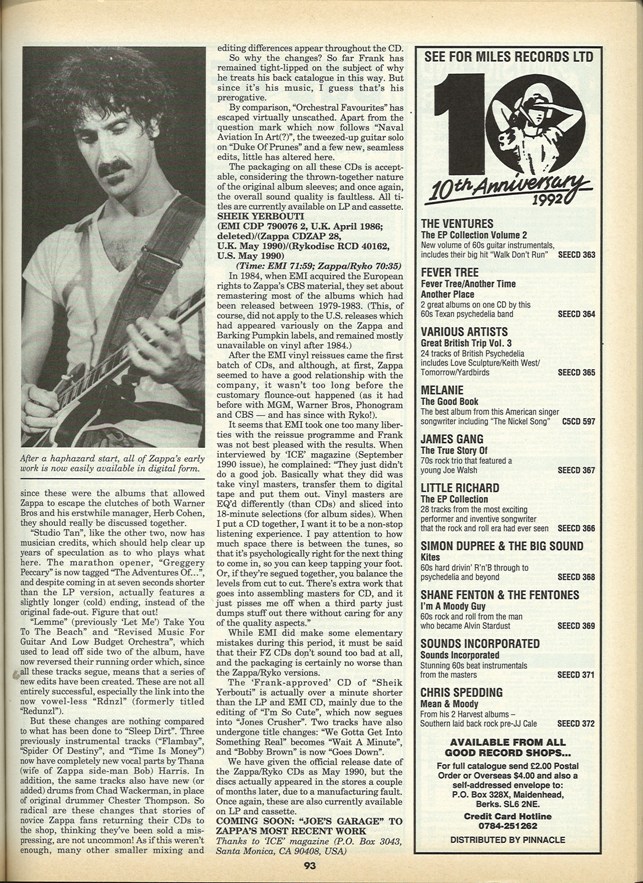
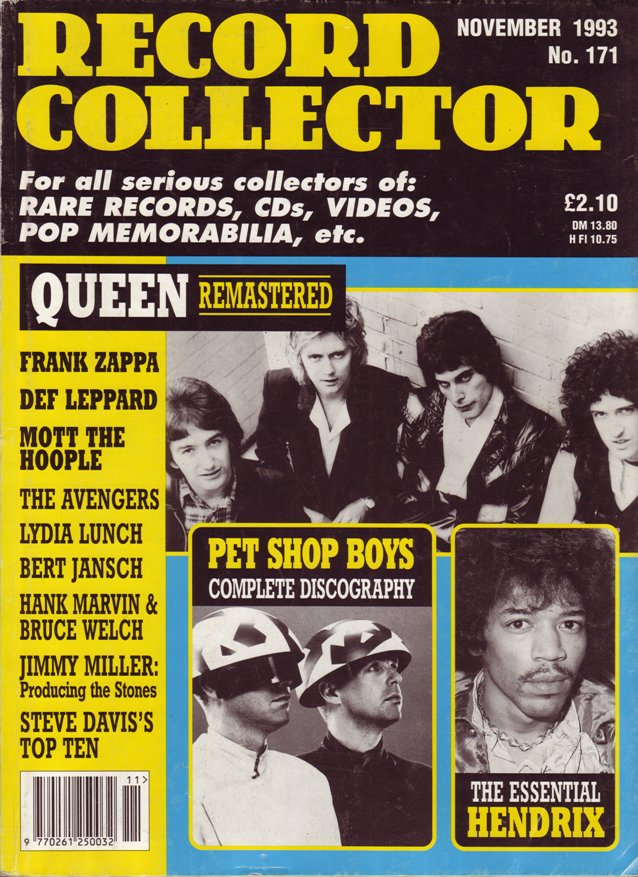
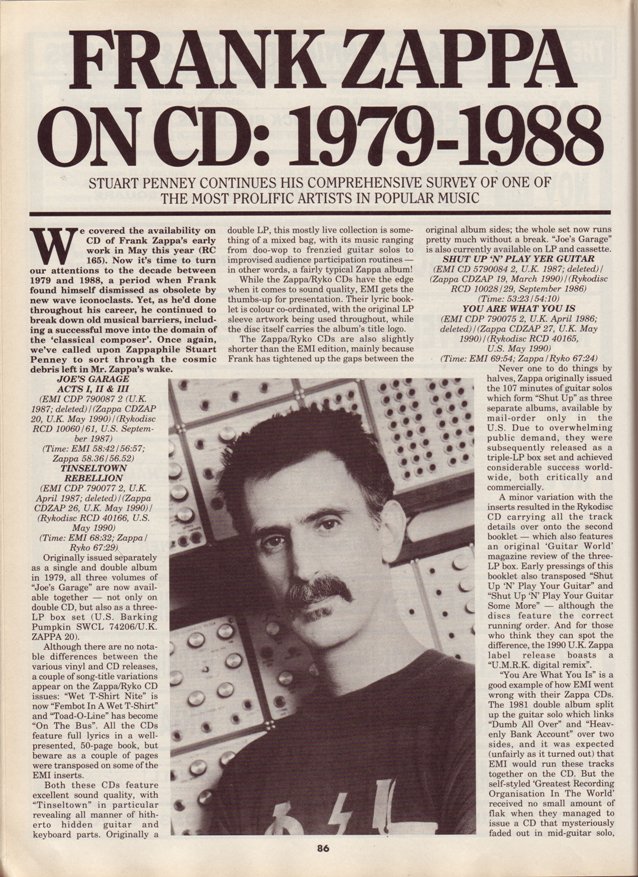


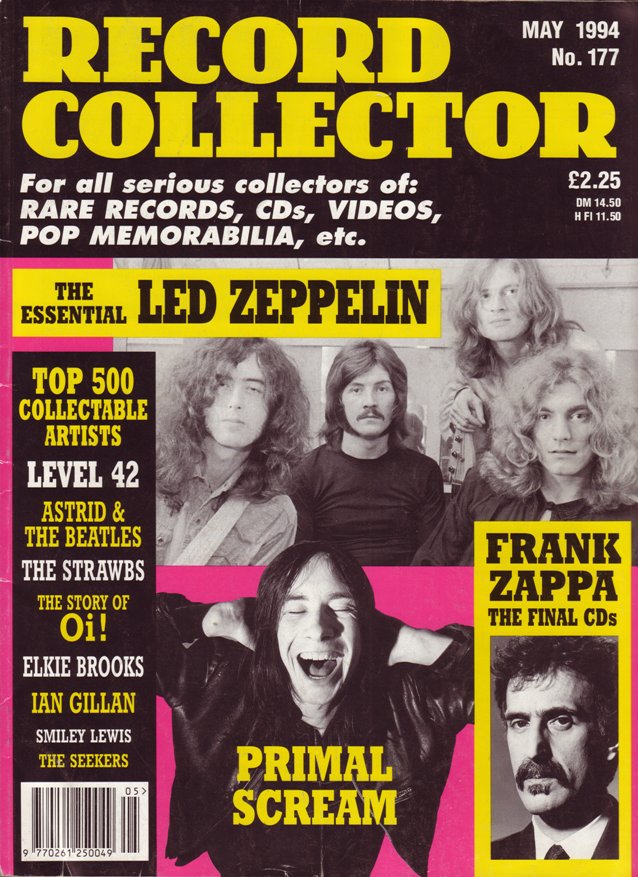
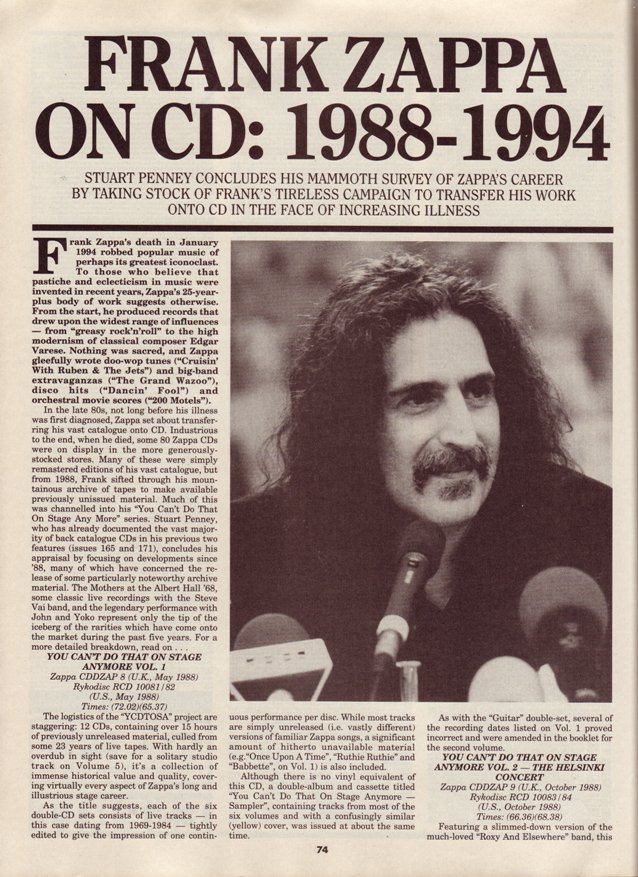

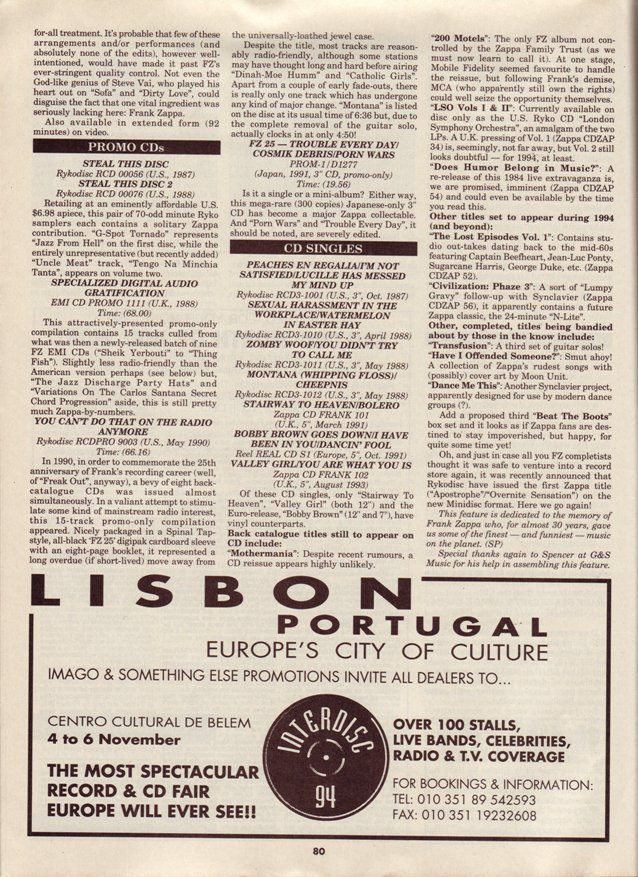
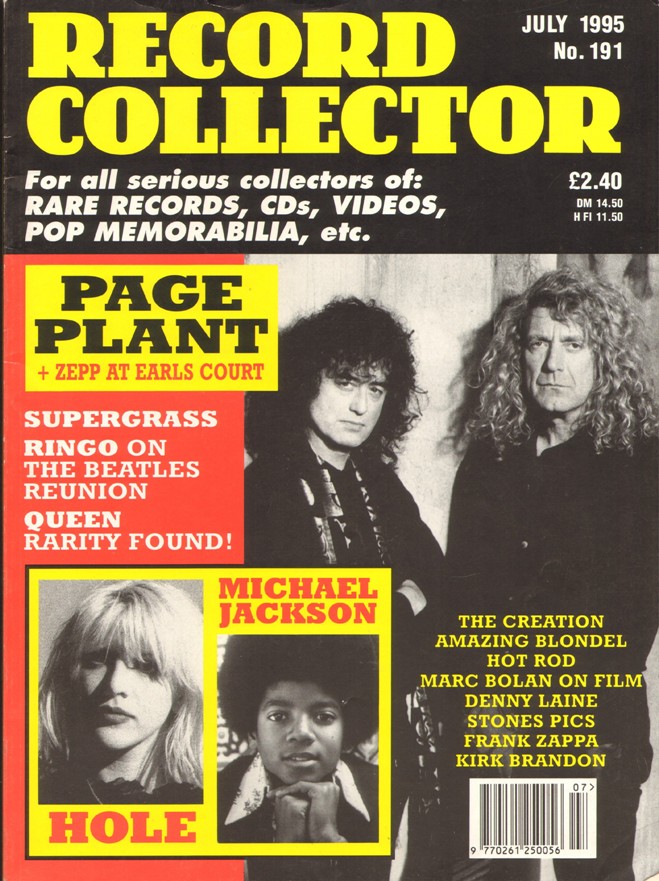
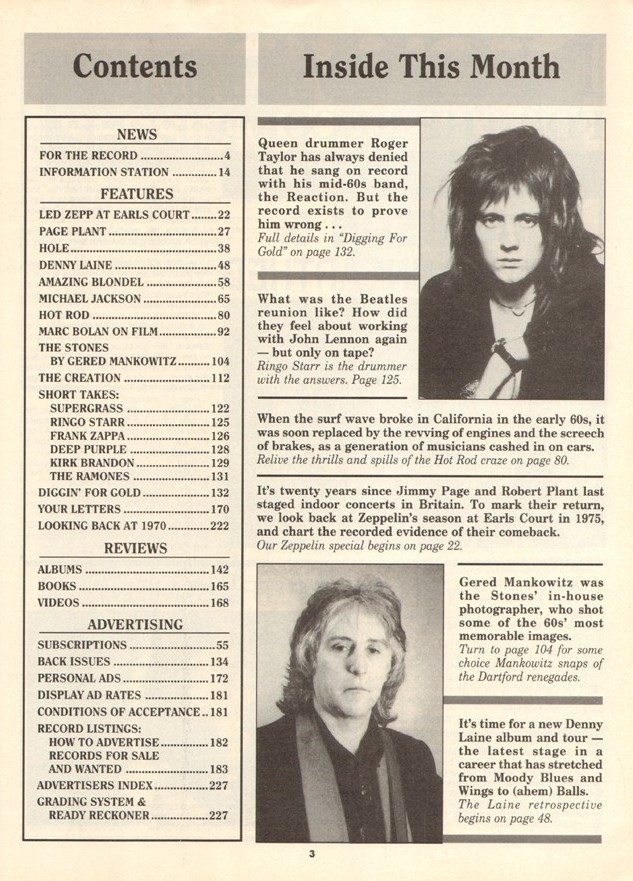
1995 July
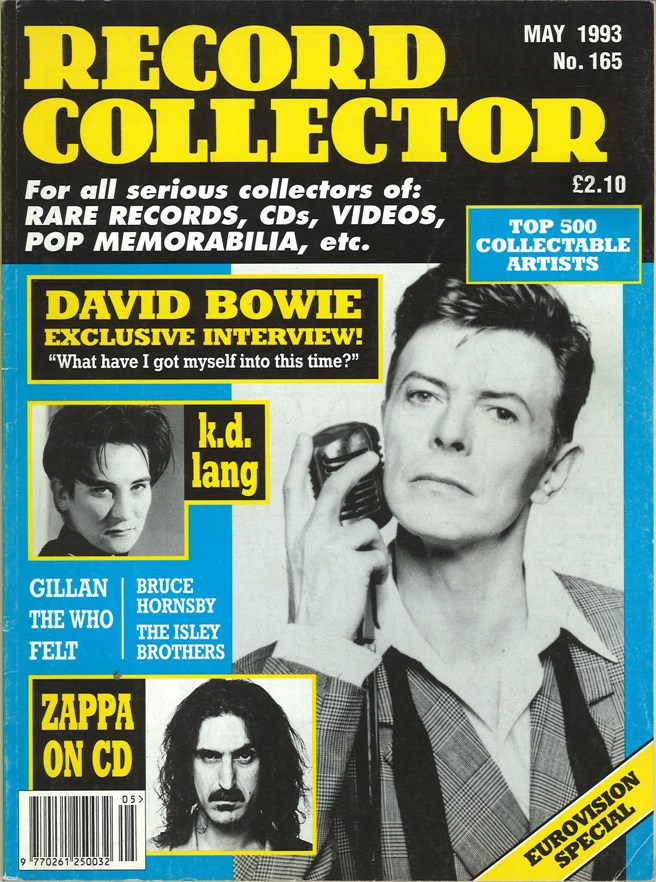
No. 191
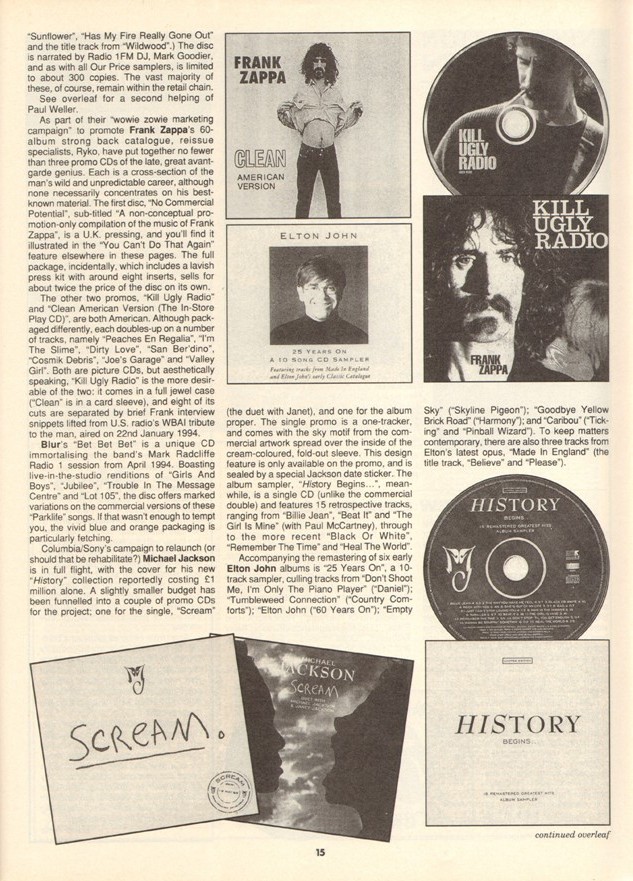
Promotional Toolbox: A Round-up Of Recent
Collectable Promos
By Andy Davis, pp 14-15
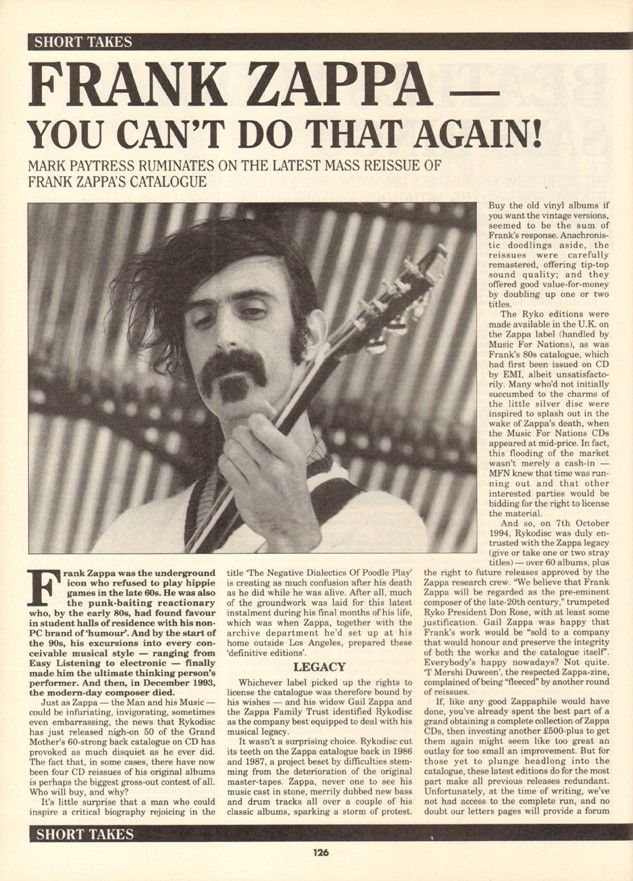
Frank Zappa – You Can't Do That Again!
By Mark Paytress, pp 126-127

1996 March
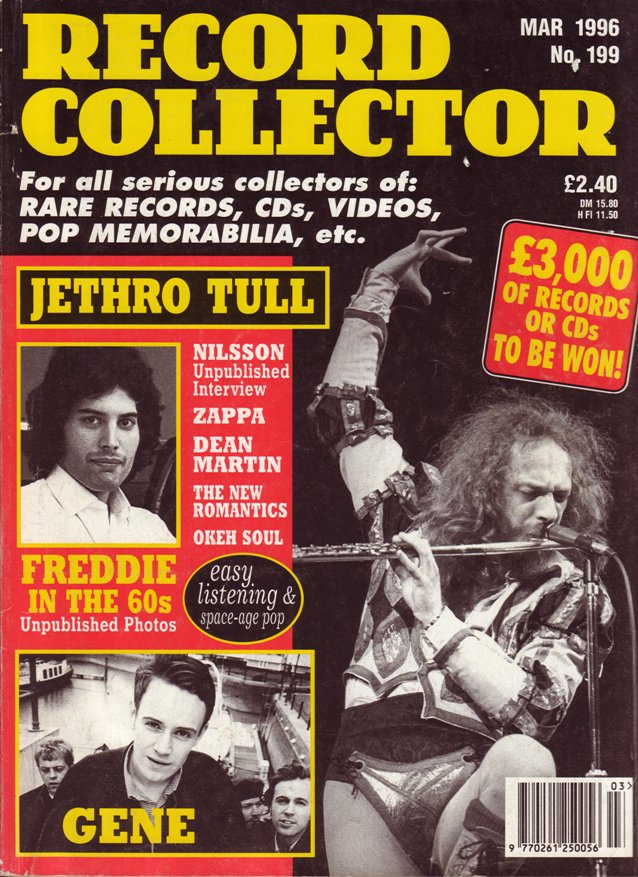
No. 199
Promotional Toolbox: A Round-up Of Recent
Collectable Promos
By Andy Davis, pp 10-11
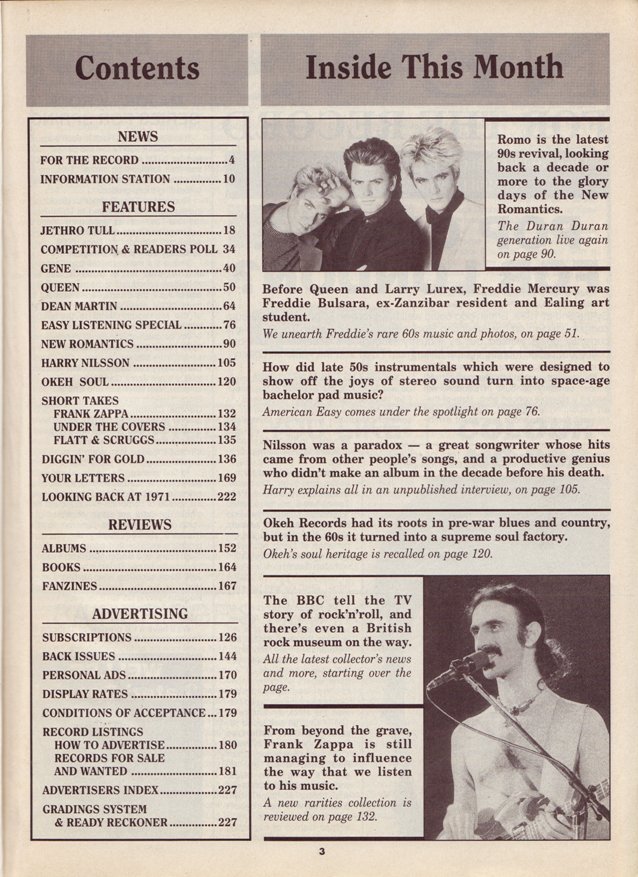
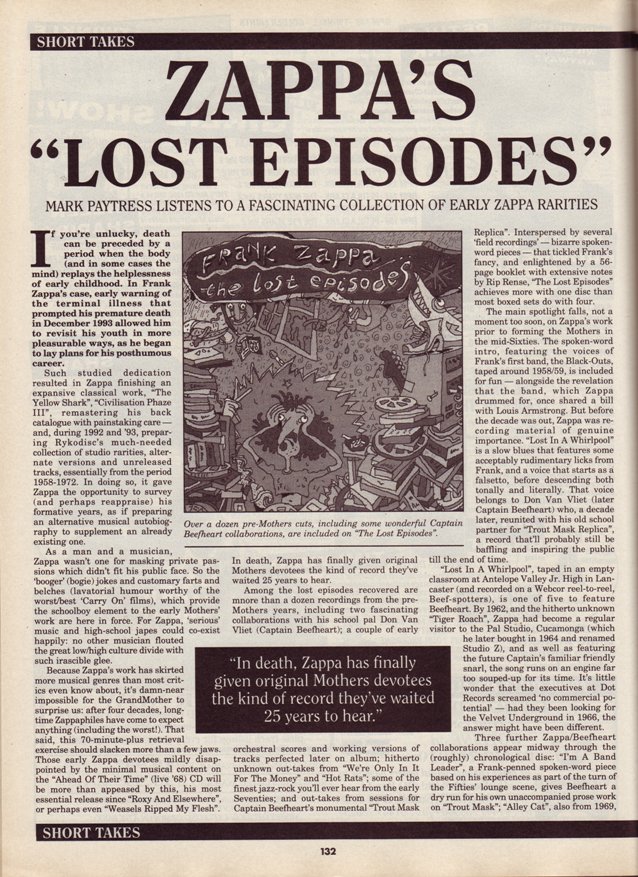
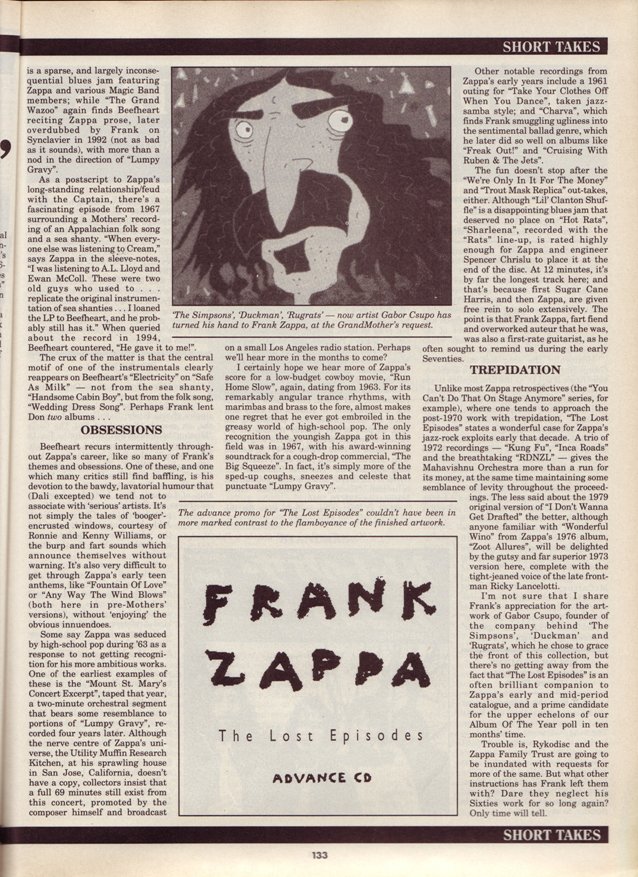
Zappa's "Lost Episodes"
By Mark Paytress, pp 132-133

1996 September
No. 205
Promotional Toolbox: A Round-up Of Recent
Collectable Promos
By Andy Davis, pp 10-11
Zappa In Läther
By Mark Paytress, p 138
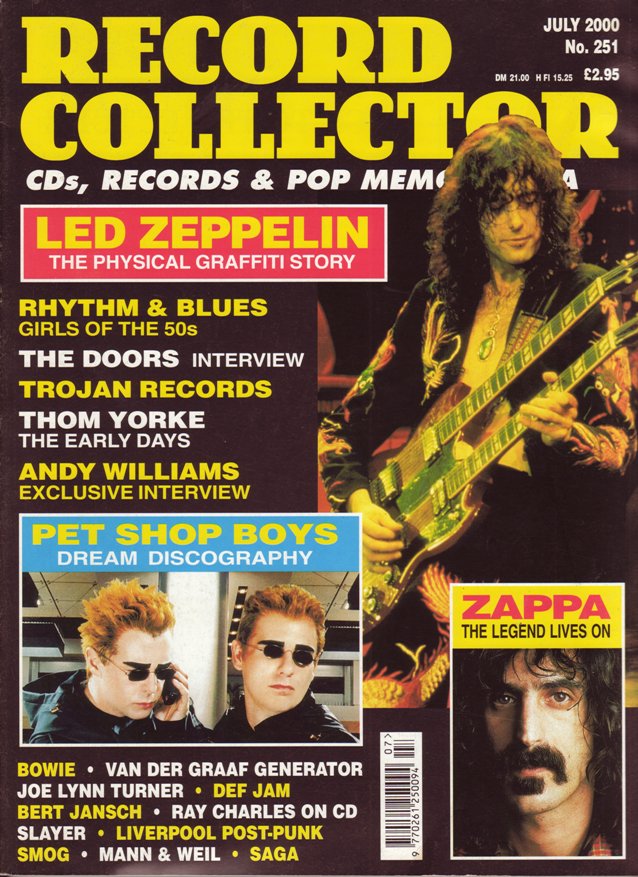
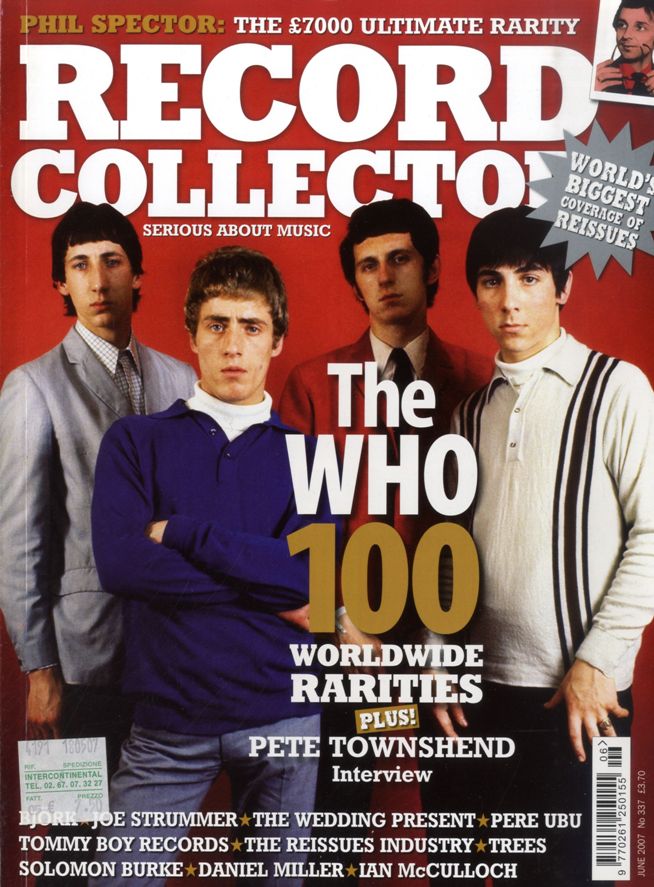
2000 July
No. 251
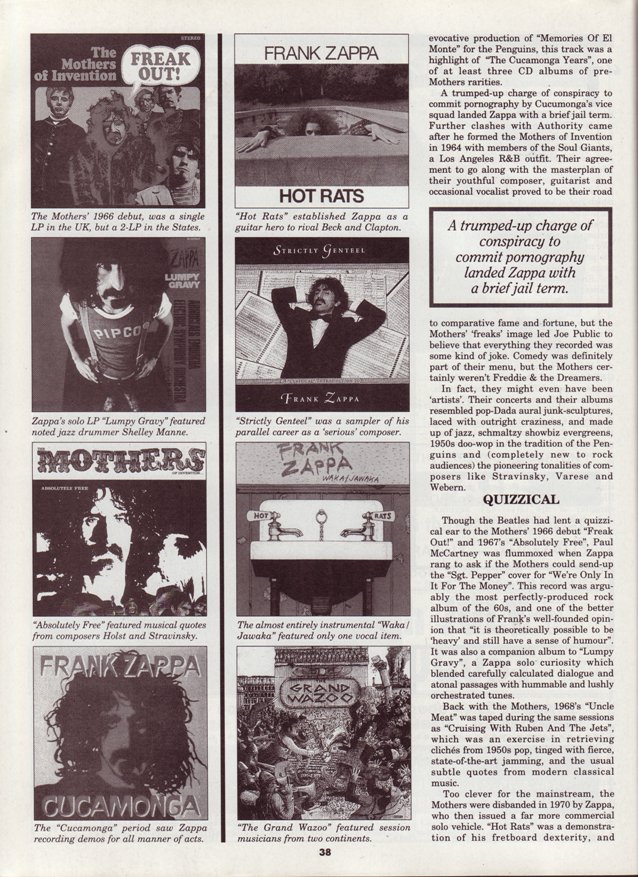
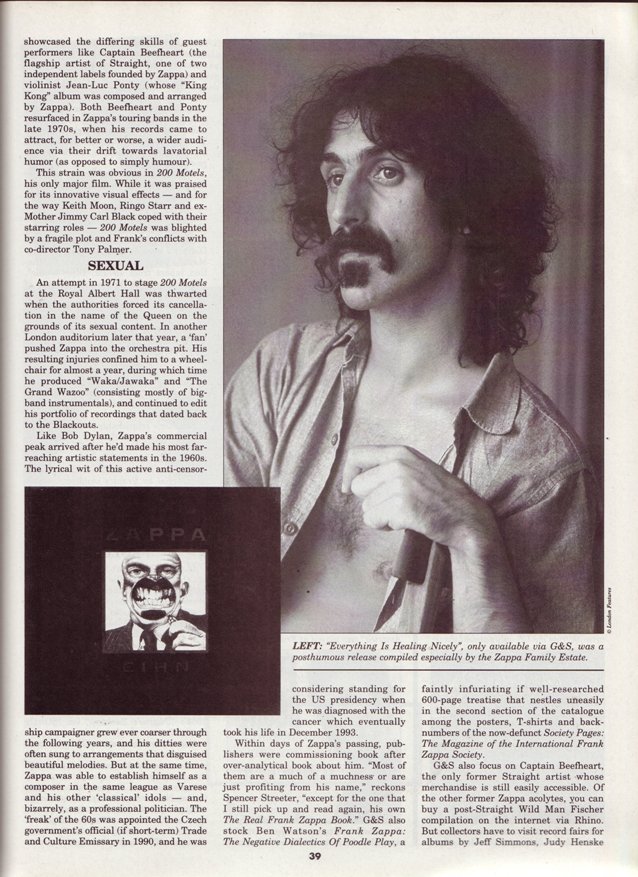
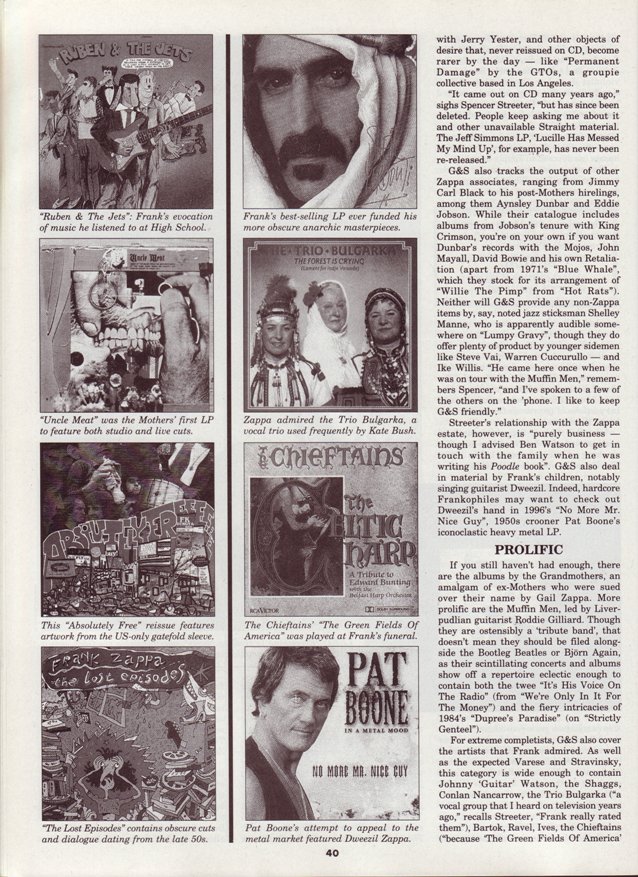
Zappa: the ongoing legacy
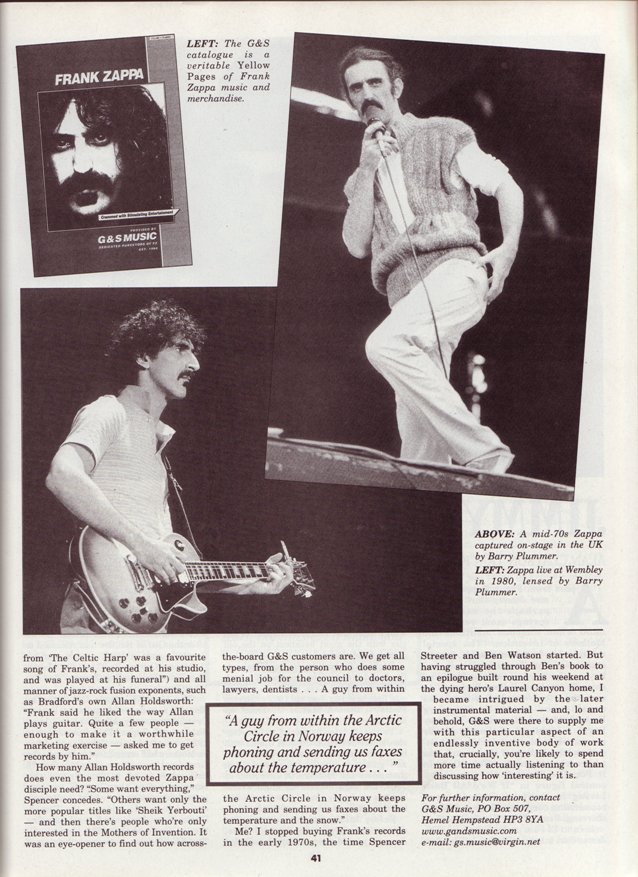
By Alan Clayson, pp 37-41
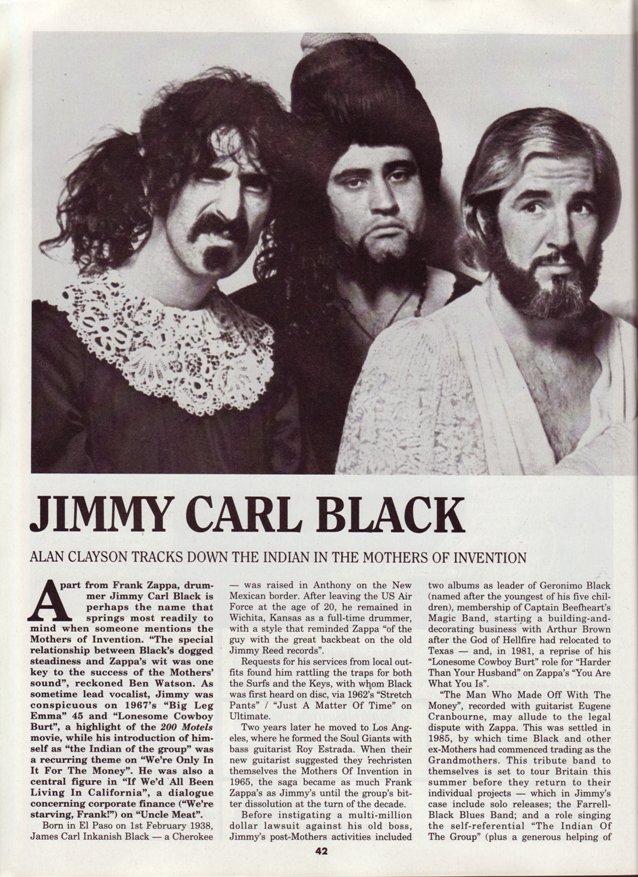
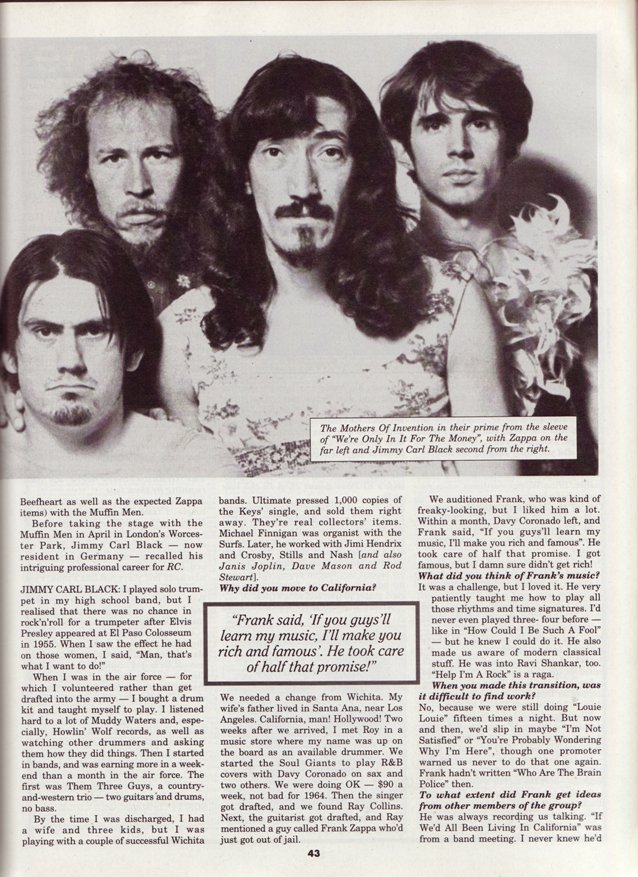
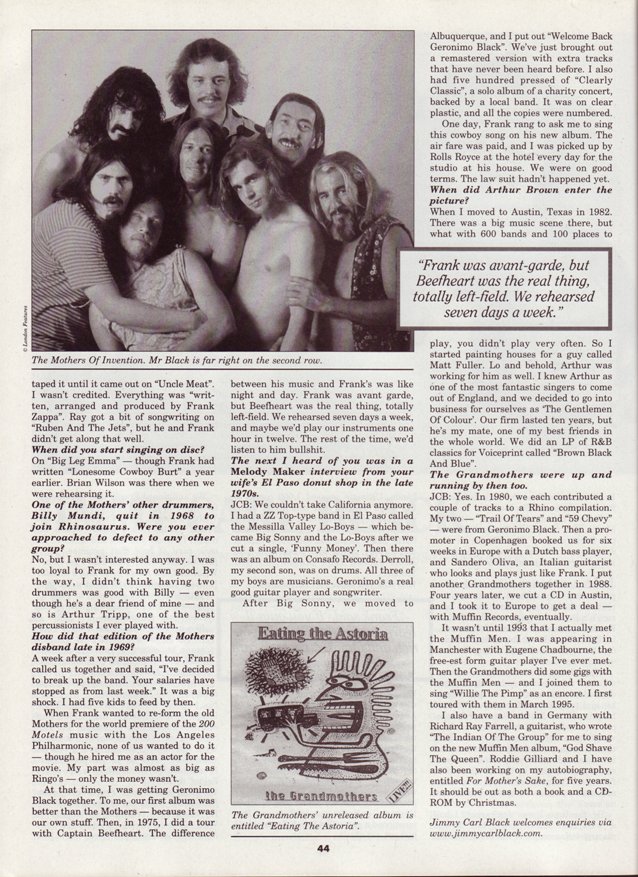
Jimmy Carl Black
Interview by Alan Clayson, pp 42-44


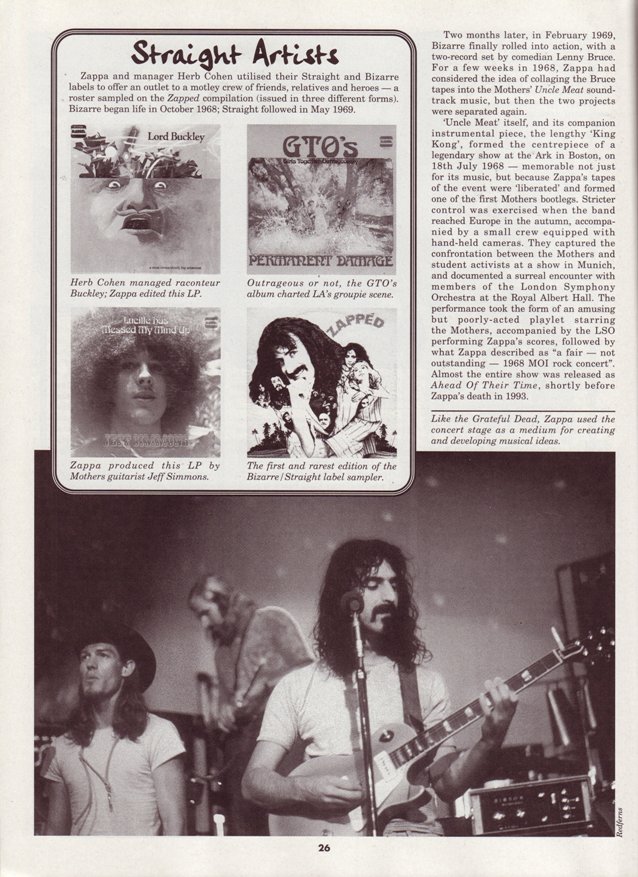

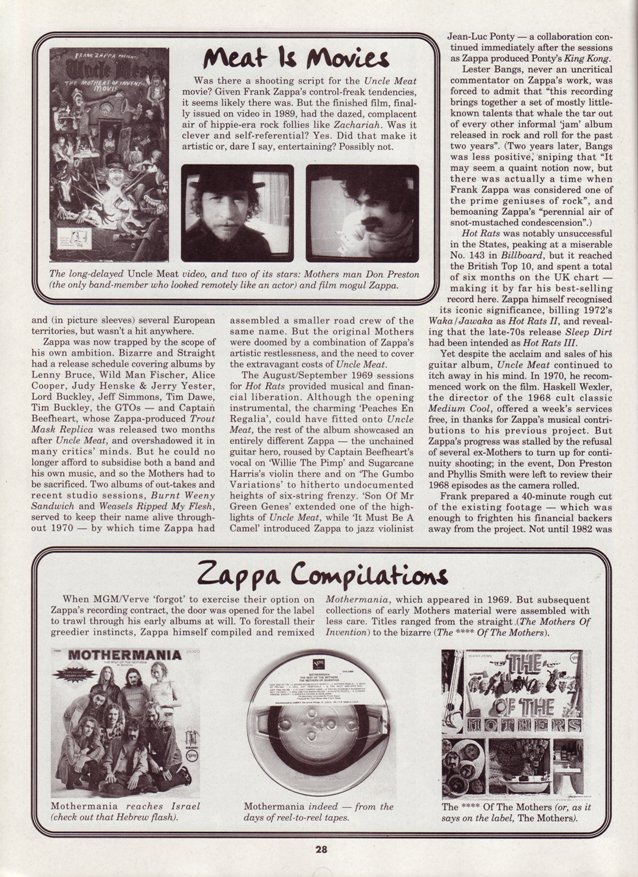
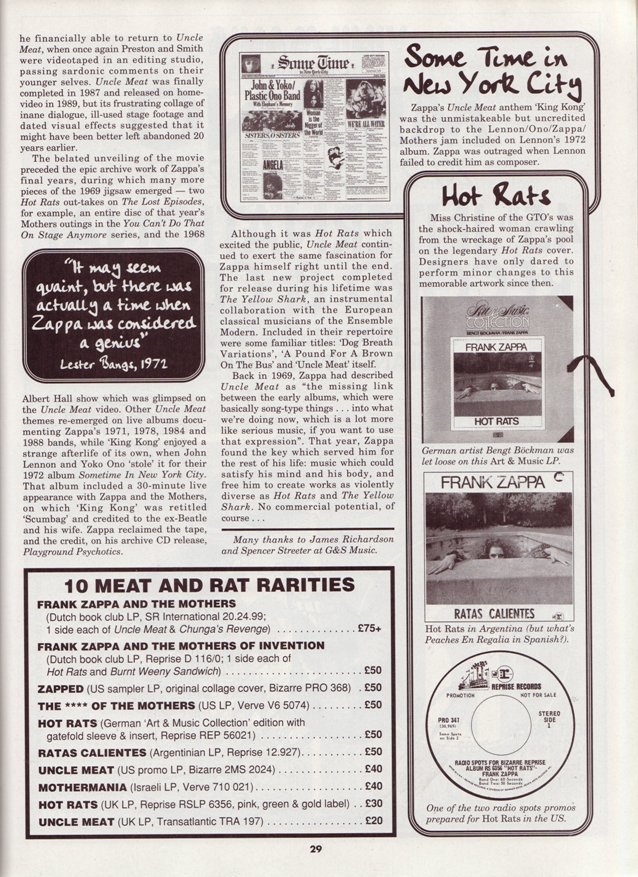




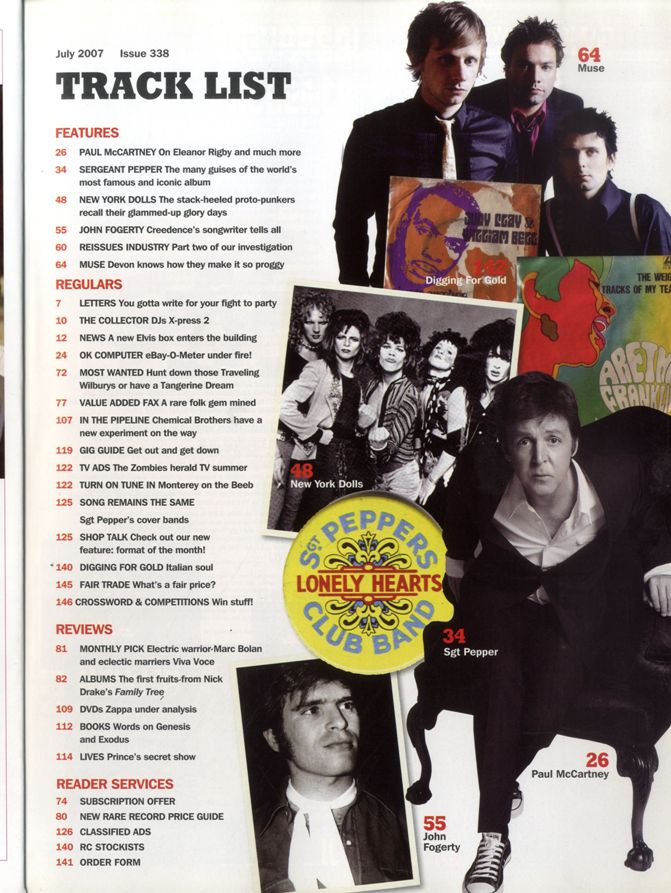

Source: Fulvio Fiore
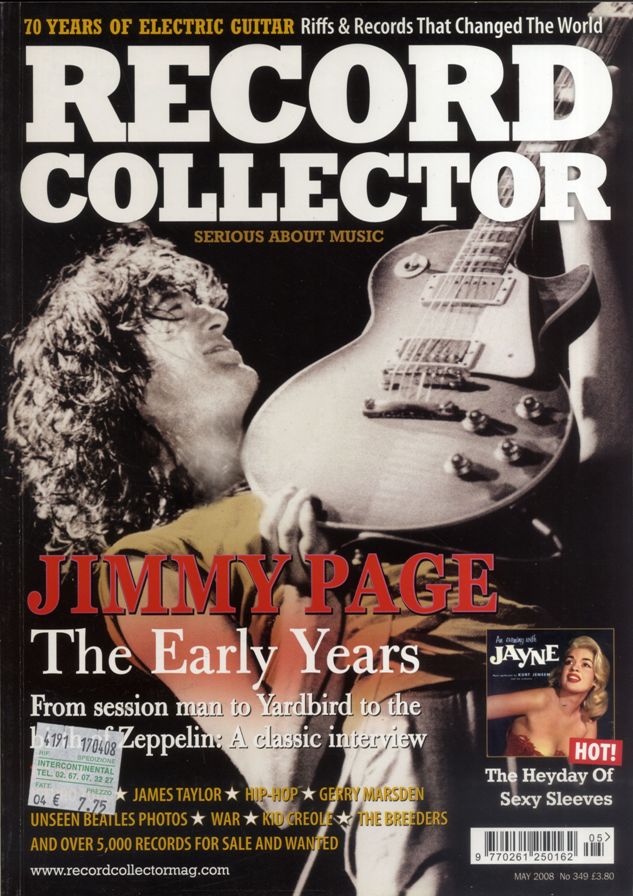
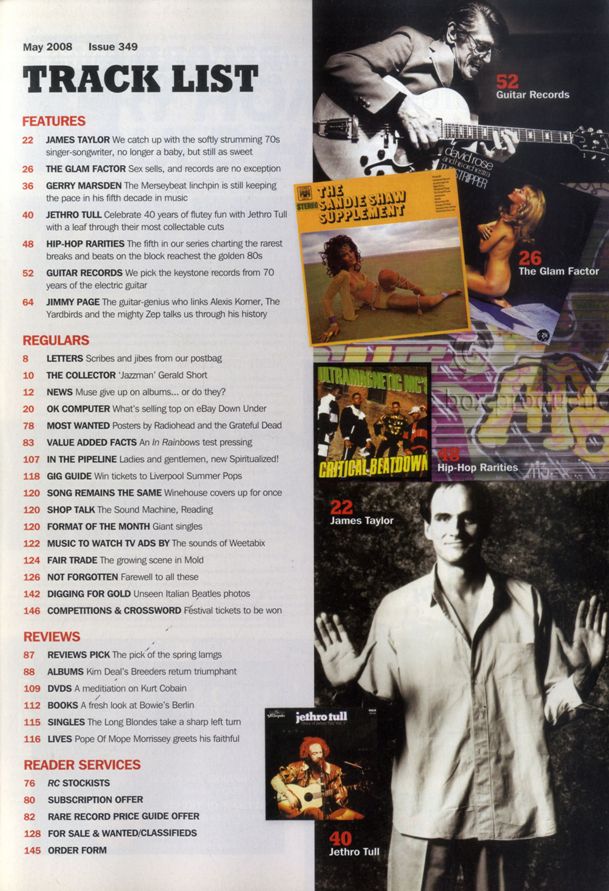

Source: Fulvio Fiore


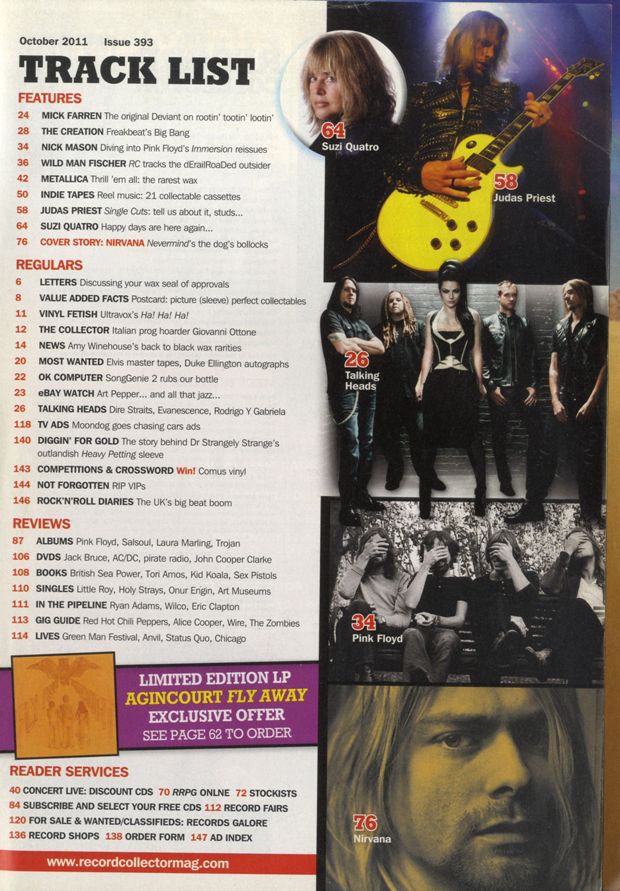
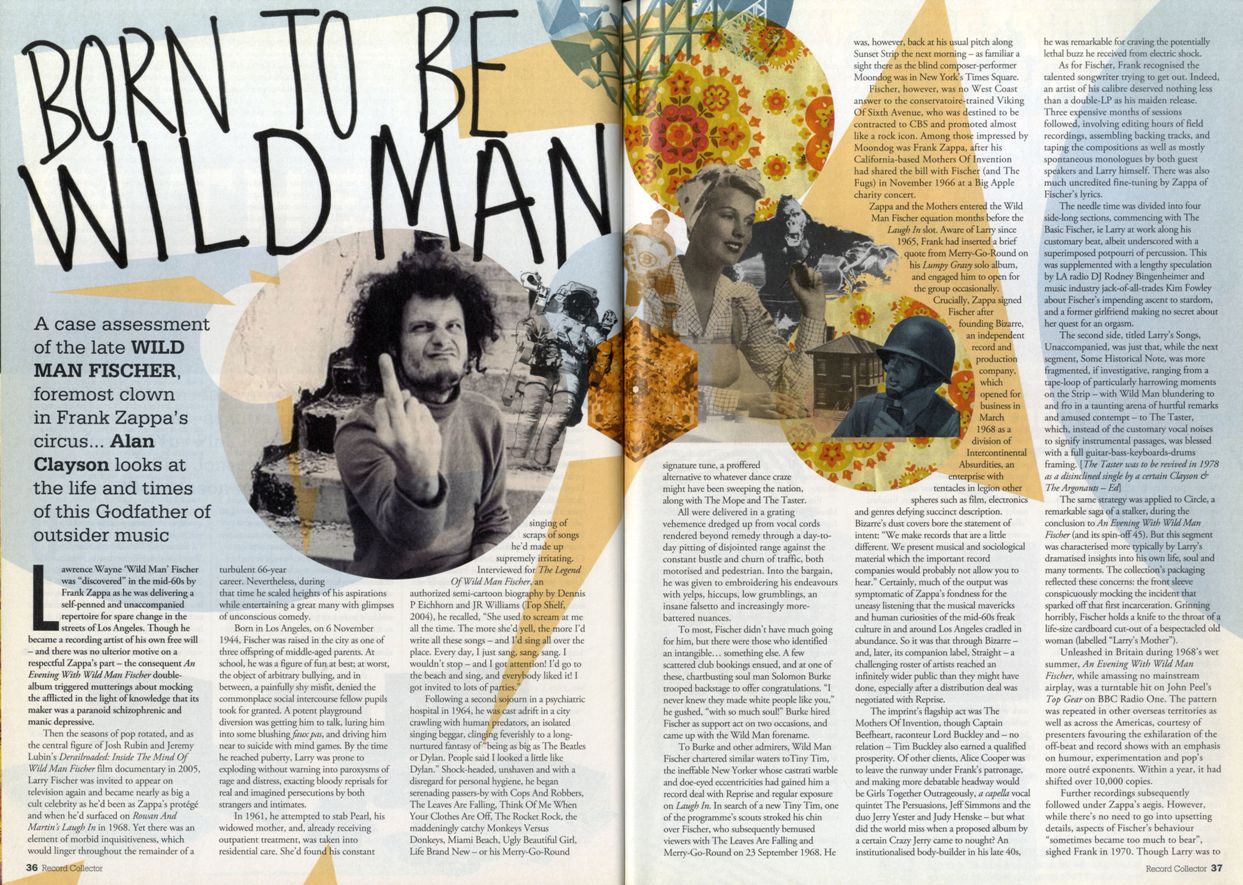
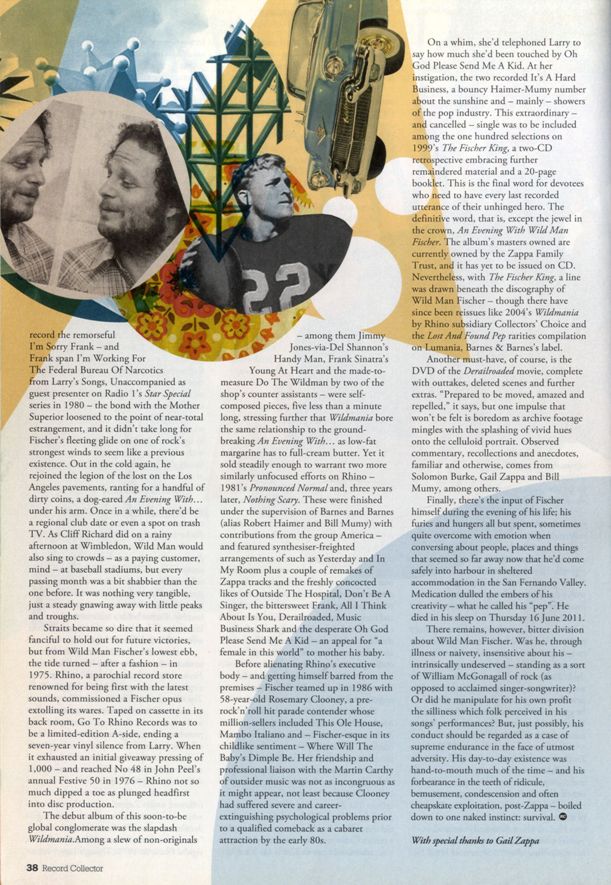
A case assessment of the late Wild Man Fischer, foremost clown in Frank Zappa's circus.

2013 July
No. 419
The Confessions Of Kaylan
By Ken Sharp, pp 40-42, 44-46
A Token Of His Extreme
By Oregano Rathbone, 1 p
After The Turtles, you did a 180 degree
turn and you and Mark joined The Mothers 0f Invention. To some
that may seem an incongruous match.
Frank always knew something nobody else knew. He was very much
Bowie-esque with that. He could see the future. Way back in
the 70s he was the first guy who said to us, “Wait and see,
nobody’s going to be in a band. There’s gonna be these supergroups
where a guy from this group, a guy from this group and a guy
from this group are gonna get together and make real music.
In every band, there’s only one real player and when those players
get together to make music it’s going to be incredible and that’s
the future.” That’s what he thought. I know why he wanted Mark
and I in the band. He wanted to add a pop sensibility to the
Morhers who were always sort of cast off as being the least
playable band in music. So when we he heard that The Turtles
had broken up – we were friends of his – he asked us to join.
The musicians in Frank’s band were the most shocked. When we
walked into that first rehearsal, Jeff Simmons looked at George
Duke, looked at Ian Underwood and looked at Aynsley Dunbar,
and went, “What the hell is Frank doing?” They knew he was gonna
audition new singers. They knew there was gonna be a new Mothers
that were gonna make this movie 200 Motels and go to
Europe. They were waiting for whoever came through the door
and thought it might be someone like Gregg Rolie [Santana] but
when it was us there was so much scepticism. As soon as we would
leave the room there was all this, “Frank, what the fuck are
you doing? Those aren’t the guys! They’re pop idiots and they’re
gonna bring the band down.” And Frank said, “I don’t think so,
I think they know what they’re doing.”
So he was right. We even questioned his sanity at the time,
as did the audience for the first few shows in Arizona and in
Europe. And then they saw what he meant. It wasn’t so much the
first few shows where we had to do what Other Mothers Of Invention
players had done, which was sing new arrangements of Frank’s
material.
Fairly quickly it became a tight-knit group who had been through
a whole lot of shit together – the fire in Montreaux, Switzerland
[noted in Smoke On The Water], the European tours, the Berkeley
orgies. All of these things Frank hadn’t done with his other
bands: this was different now. We were sharing experiences fand
hanging out and he was getting high with us. It was very different
and I’m thrilled to have been part of that era because it ended
quickly and his distrust for humanity kicked in big time again
after that accident in England where he was seriously injured.
He was never quite the same and went back to being the cynic
he’d been prior to this closeness. I don’t think any band member
permeated that again. I know that at the end of his life he
asked us back. We reminisced and talked, but he was close to
that bunch of Mothers Of Invention and it never really was the
Mothers of Inventions again after that. It was different.


Source: Fulvio Fiore
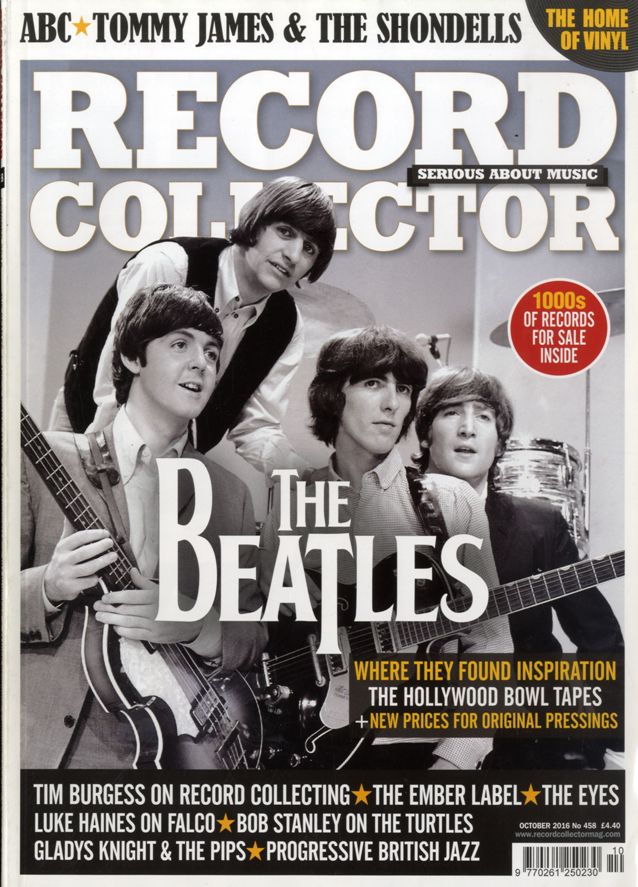
2016 October
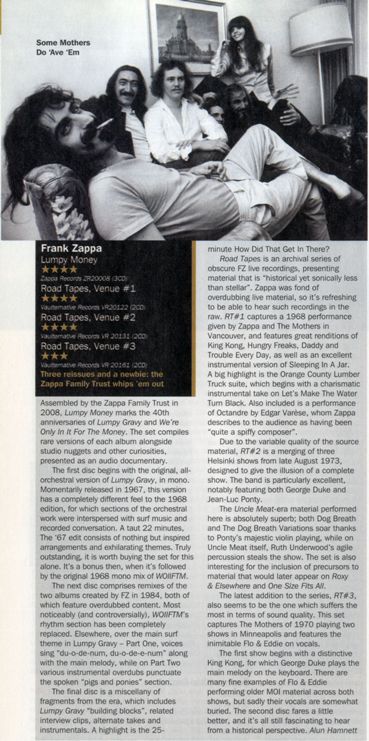
No. 458
Lumpy Money, Road Tapes, Venue #1, Road Tapes, Venue #2, Road
Tapes, Venue #3 | Frank Zappa
By Alun Hamnett, 1 p
Source: Fulvio Fiore
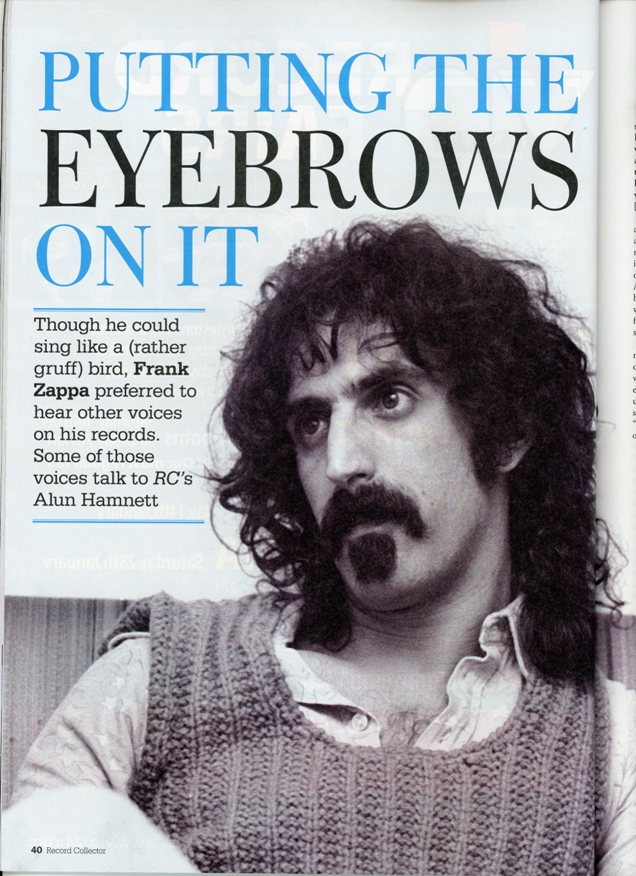
"Though he could sing like a (rather gruff) bird, Frank Zappa preferred to hear other voices on his records. Some of those voices talk to RC's Alun Hamnett."
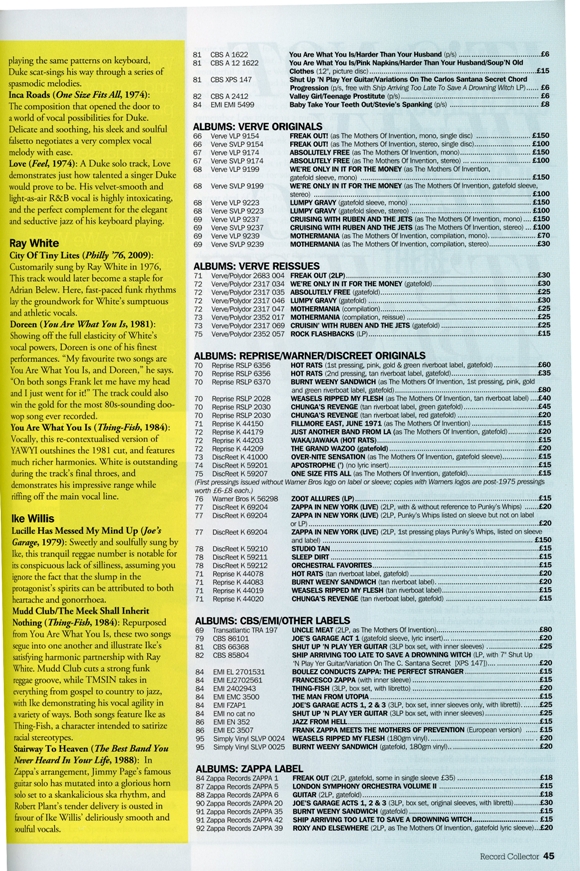
Source: Bill Lantz
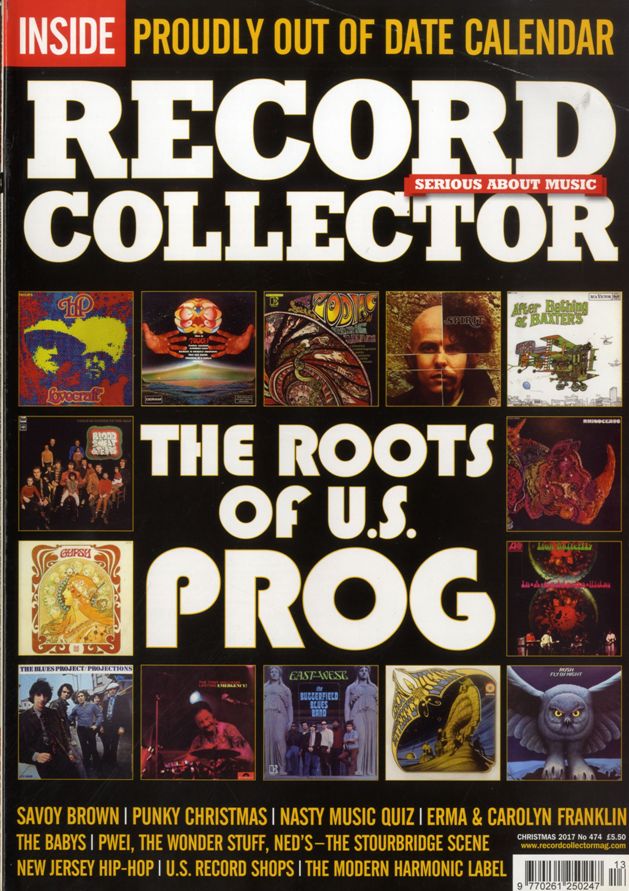
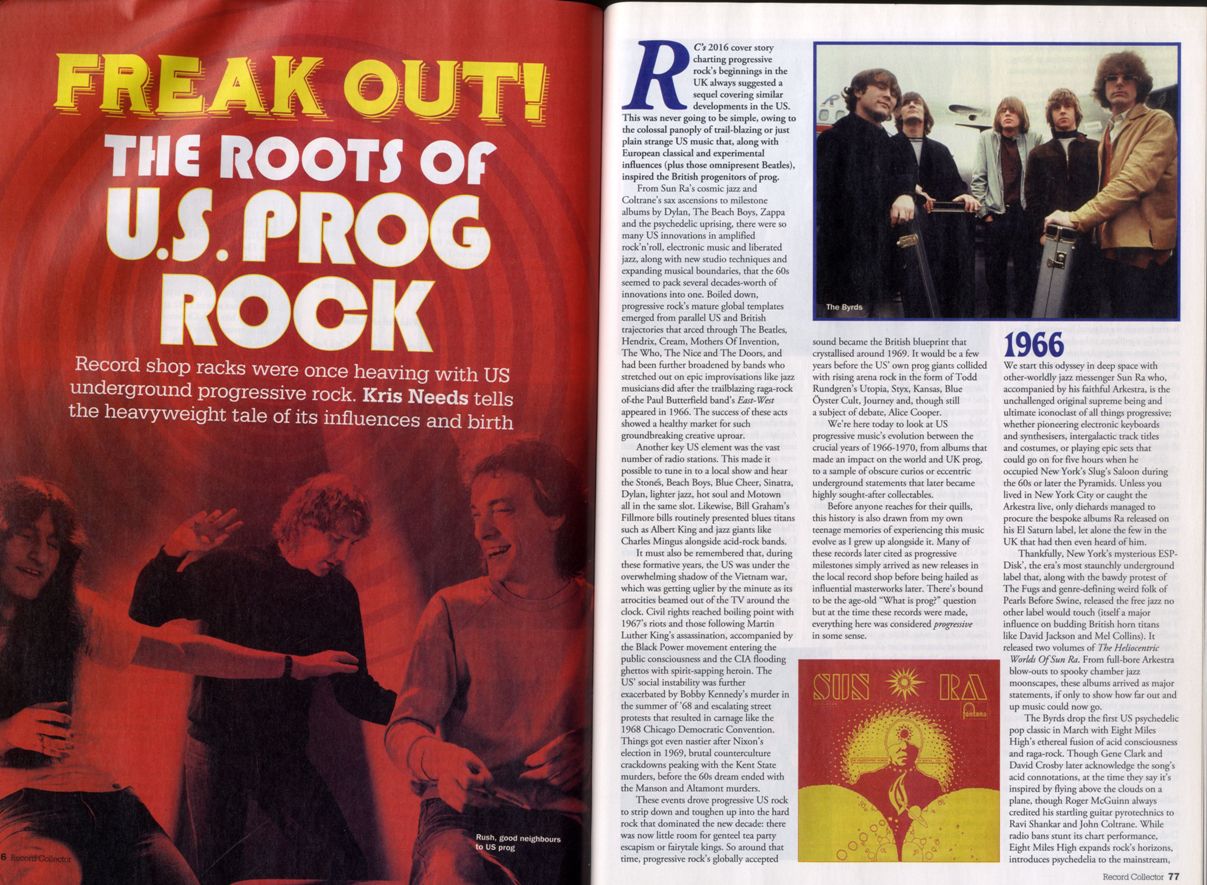
Record shop racks were once heaving with US underground progressive rock. Kris Needs tells the heavyweight tale of its influences and birth.
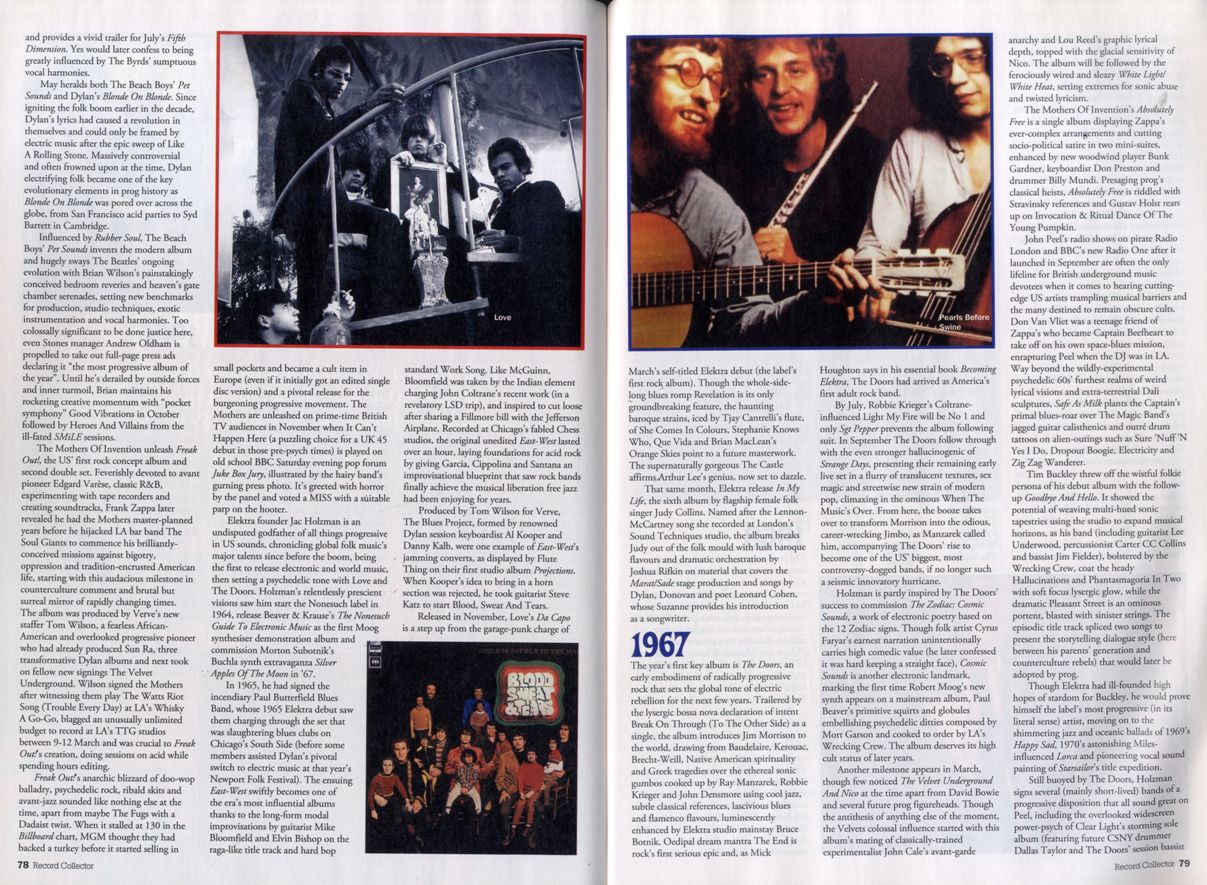


Source: Fulvio Fiore

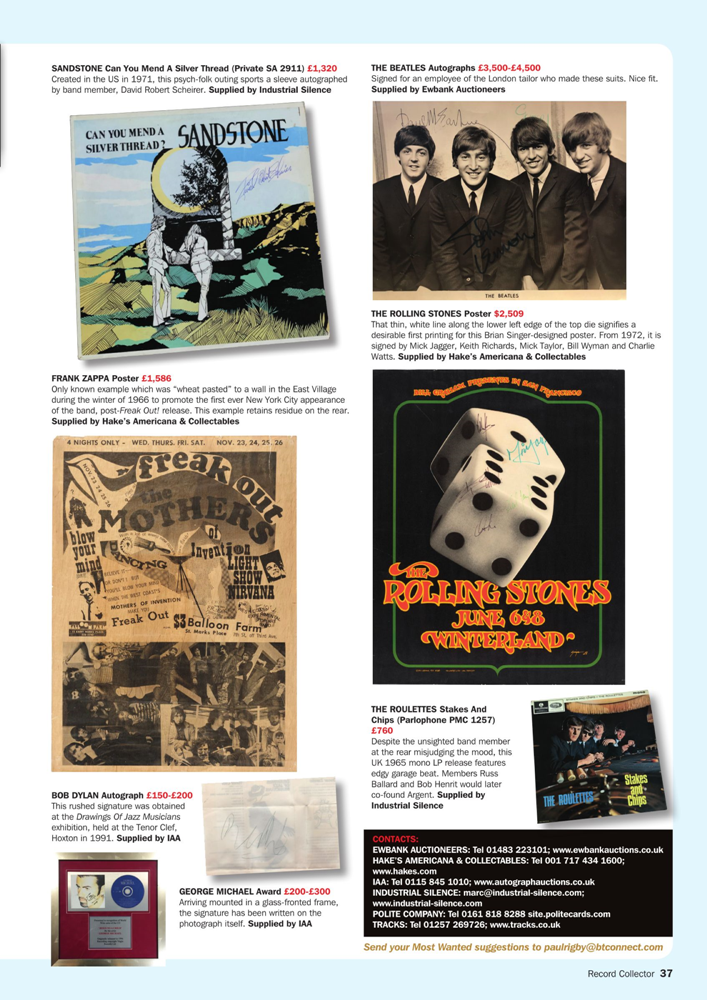
Frank Zappa poster
Only known example which was "wheat pasted" to a wall in the
East Village during the winter of 1966 to promote the first
ever New York City appearanve of the band, post-Freak Out!
release.
See also
Hake's Americana & Collectables - MOI Balloon Farm 1966
poster.


Source: Hake's Americana
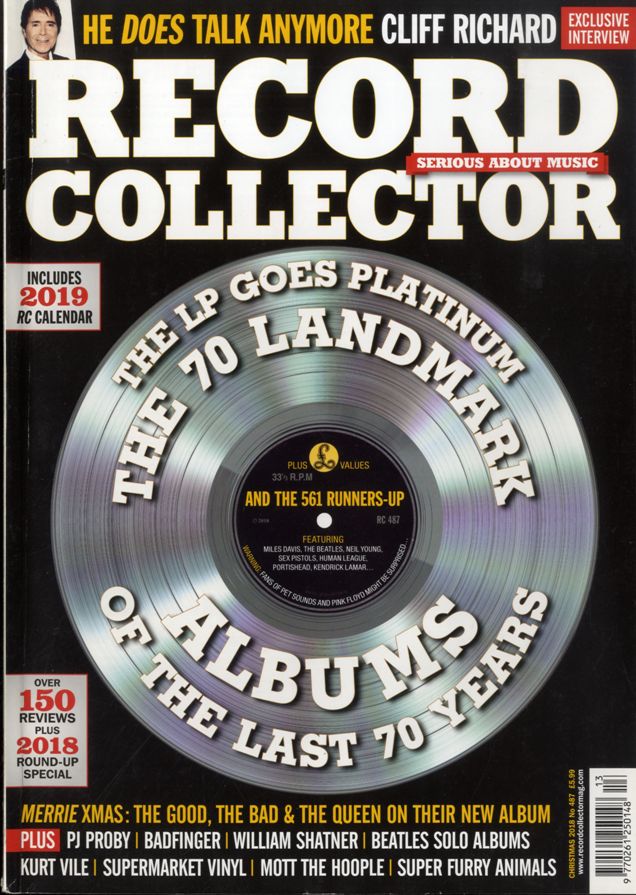
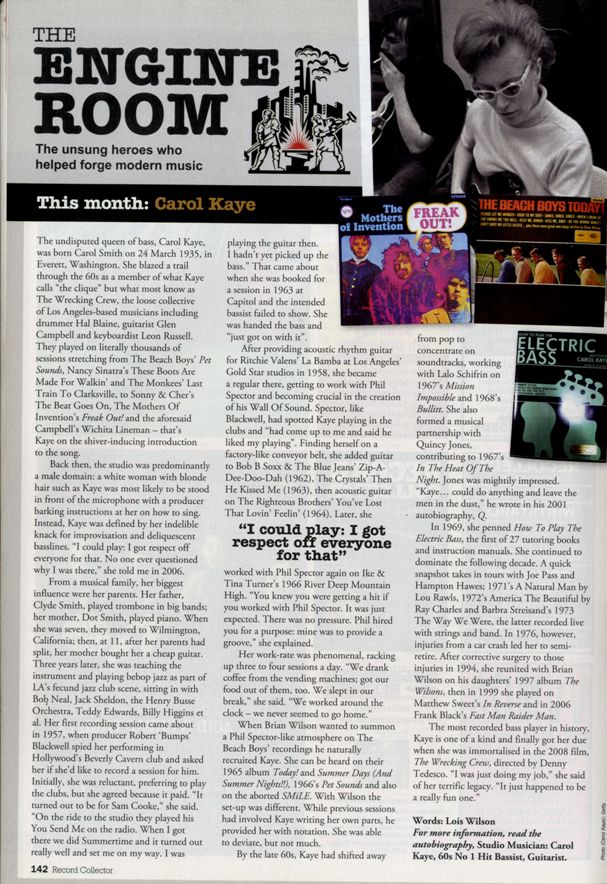
Session musician Carol Kaye played 12 string guitar on Freak Out! and Absolutely Free, bass on Lumpy Gravy.
Source: Fulvio Fiore
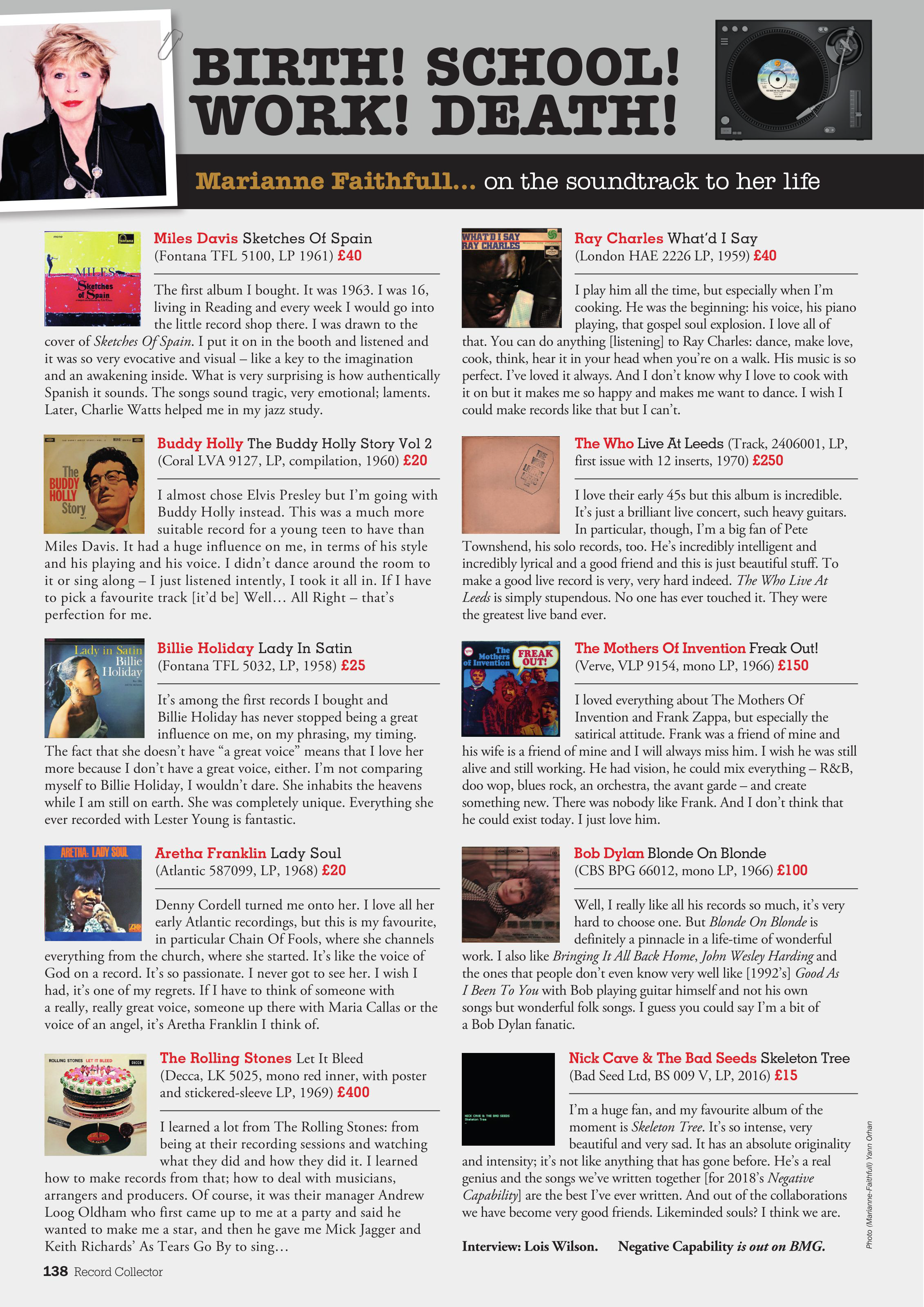
The Mothers Of Invention
Freak Out
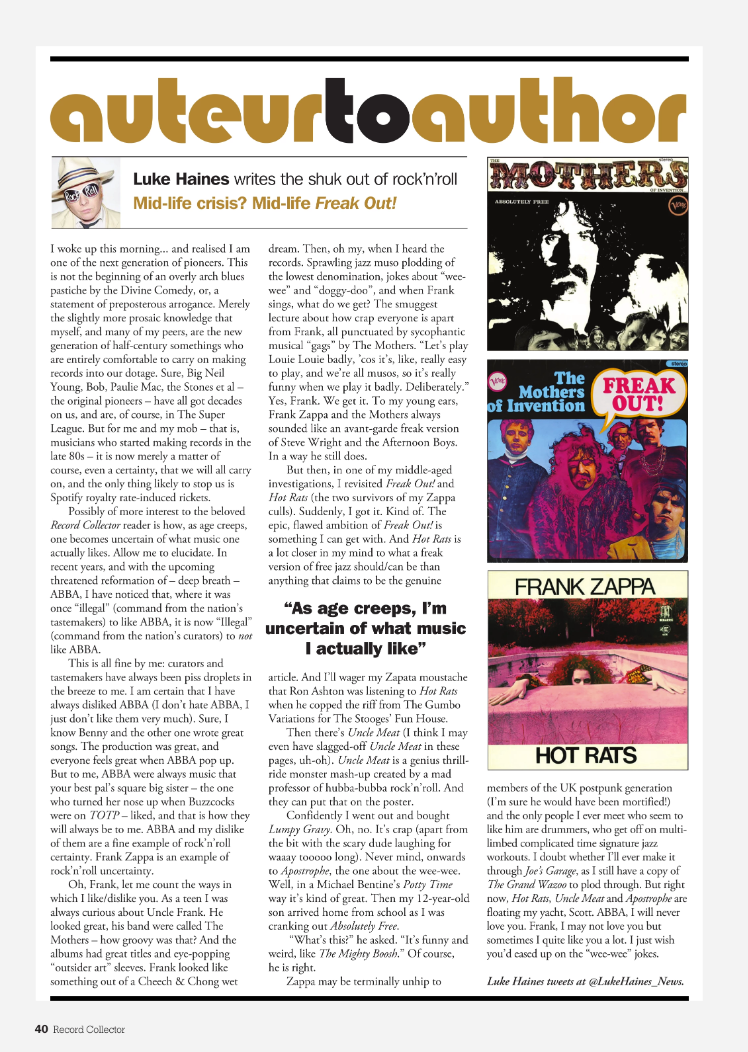
I loved everything about The Mothers Of Invention and Frank
Zappa, but especially the satirical attitude. Frank was a friend
of mine and his wife is a friend of mine and I will always miss
him. I wish he was still alive and still working. He had vision,
he could mix everything – R&B, doo wop, blues rock, an orchestra,
the avant garde – and create something new. There was nobody
like Frank. And I don't think that he could exist today. I just
love him.

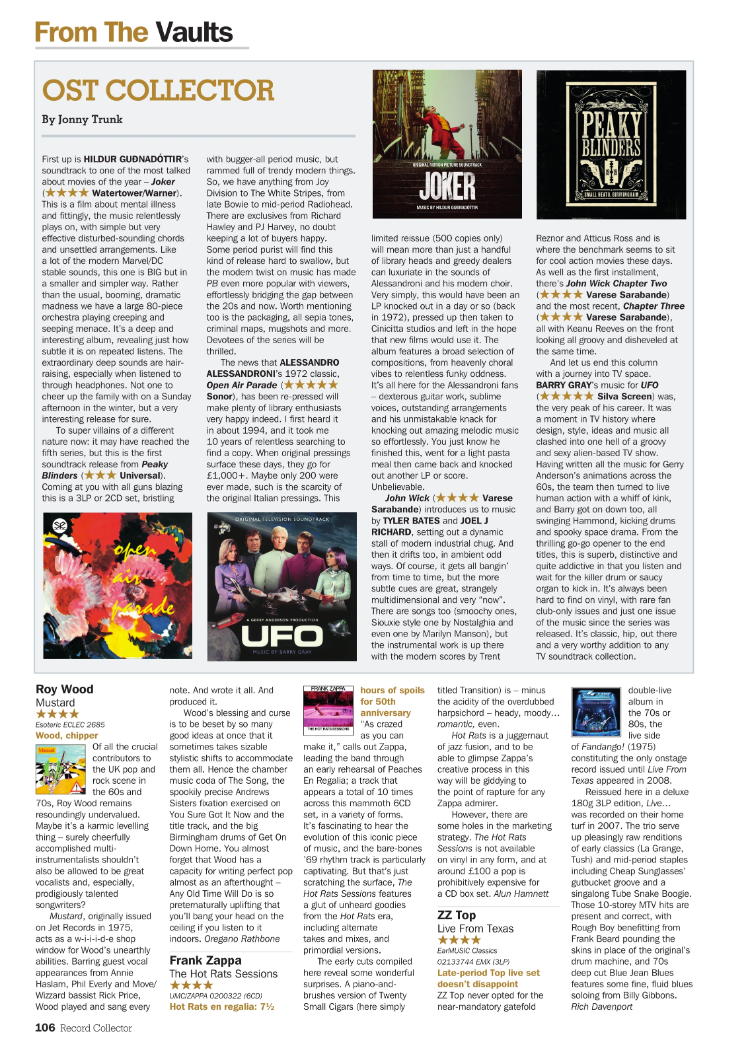
Hot Rats en regalia: 7½ hours
of spoils for 50th anniversary
"As crazed as you can make it," calls out Zappa, leading the
band through an early rehearsal of Peaches En Regalia; a track
that appears a total of 10 times across this mammoth 6CD set,
in a variety of forms. It's fascinating to hear the evolution
of this iconic piece of music, and the bare-bones '69 rhythm
track is particularly captivating. But that's just scratching
the surface, The Hot Rats Sessions features a glut
of unheard goodies from the Hot Rats era, including
alternate takes and mixes, and primordial versions.
The early cuts compiled here reveal some wonderful surprises.
A piano-and-brushes version of Twenty Small Cigars (here simply
titled Transition) is – minus the acidity of the overdubbed
harpsichord – heady, moody... romantic, even.
Hot Rats is a juggernaut of jazz fusion, and to be able
to glimpse Zappa's creative process in this way will be giddying
to the point of rapture for any Zappa admirer.
However, there are some holes in the marketing strategy.
The Hot Rats Sessions is not available
on vinyl in any form, and at around £100 a pop is prohibitively
expensive for a CD box set.

Happy together? Short-lived Mothers line-up
showcased
With the doors to the Zappa Vault now seemingly propped open,
the releases just keep on coming. The Mothers 1970
captures the short-lived line up of Aynsley Dunbar, George Duke,
Ian Underwood, Jeff Simmons and Flo & Eddie (aka Howard
Kaylan and Mark Volman), both live and in the studio, with a
glut of unreleased material spread across a 4CD set.
The studio tracks are the most compelling. Red Tubular Lighter
is a greased up, psych rock and blues jam that reminds a little
of Willie The Pimp and is littered with deliciously skittish
guitar licks. A further treat is an early, piano-driven Wonderful
Wino which effortlessly trumps the Zoot Allures version.
The live material sees Flo & Eddie let loose on early Mothers
material, with the band also previewing material from the
200 Motels soundtrack. While the performances do not,
on the whole, rival those of Fillmore East – June 1971
and Road Tapes, Venue #3 (2016 release of two July
1970 shows) an instrumental Sleeping In A Jar demonstrates their
formidable agility.


2023 December
No. 551
Frank Zappa & The Mothers:
Over-Nite Sensation 50th Anniversary
By Jamie Atkins, p 95
One for the dental floss enthusiasts
The golden
anniversary of Zappa and the Mothers' 1973 classic is celebrated
here with a box set including the 2012 remaster, session tracks,
two contemporary live shows, and multiple mixes of the original
album (Dolby Atmos, 5.1 surround, Zappa's 1973 Quadrophonic
mix). Over-Nite Sensation was recorded months after Zappa assembled
an all-new Mothers –
all virtuosos, including George Duke (keyboards),
Ian Undenvood (sax, synths etc) and Ruth Underwood (percussion).
The emphasis has shifted to blistering funk-rock with a renewed
emphasis on Zappa's vocals and guitar-playing. Extras include
the Inca Roads released on The Lost Episodes with newly discovered
period vocals and the '73 RDNZL with added Zappa guitar solo.
The live shows are breathtaking reminders of the talent Zappa
had at his disposal –
check the wild Big Swifty from the 23
March '73 Hollywood show or the Uncle Meat selections from 12
May in Chicago.


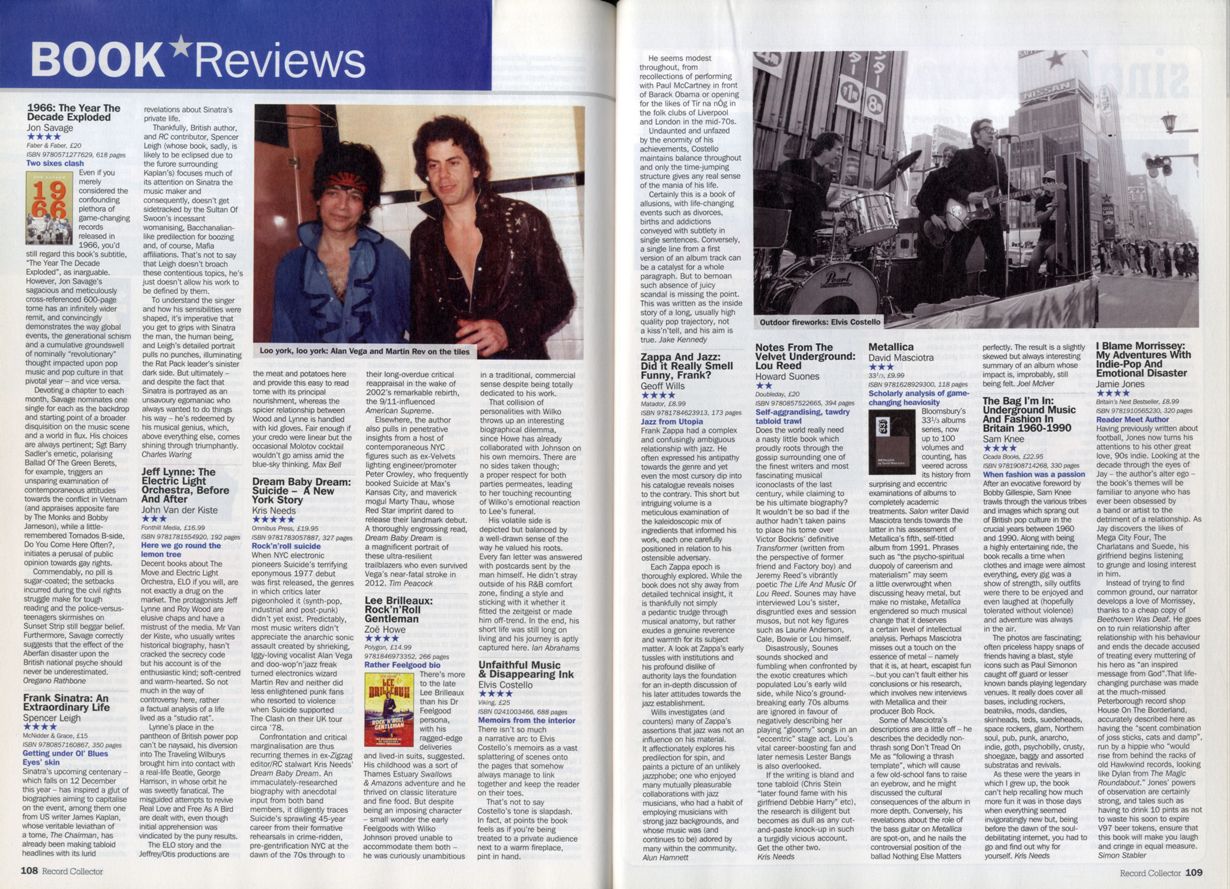
We also recommend reading the interview with Japanese pianist Hiromi, a big Zappa fanatic, on page 47 and the article about Shankar, an Indian violinist who collaborated with Zappa, on page 126.

2024 November
No. 563
Great Googly Moogly!
Frank Zappa: Apostrophe (') Super Deluxe 50th Anniversary Edition
By Jamie Atkins, pp 86-87


