 NON-FOODS
Stepping Outside The Beat
By Frank Zappa
LAST MONTH FRANK ADDRESSED the use of the lydian mode in solos and discussed how musical chance-taking can spice up one's playing. This month he answers more questions pertaining to solos over vamps, such as in "Heavy Duty Judy "[Shut Up'N Play Yer Guitar], and delves into the rhythmic relationships between instrumentalists in a band [Ed. Note: The name of Frank's column has been changed from "Absolutely Frank" to "Non-Foods." He thought the former title was a bit too serious.]
* * * *
"Heavy Duty Judy" sounds as if it's based on more than one tonality.
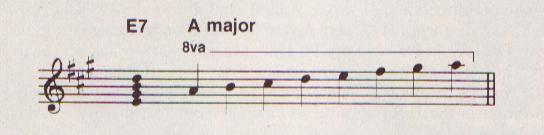
I do that all the time. For instance, that's just an E7 vamp, and I like to play in the key of A. It's just like playing in the tonality of the eleventh.
That can be pretty hairy for someone used to playing only major and minor chords and 7ths.
They're missing out! The fun doesn't start until you get to the eleventh.
Further complicating the piece are the many different rhythms.
Well, basically, in that tune you've got the band – bass, keyboards, and rhythm guitar – playing the same shuffle rhythm, and the guitar and drums are going ape-shit on top of that, but always knowing where the downbeat is going to come back. That doesn't mean that you have to play the downbeat, because everybody else is doing it – playing hemiolas [rhythmic relationships of three against two] across the bar.
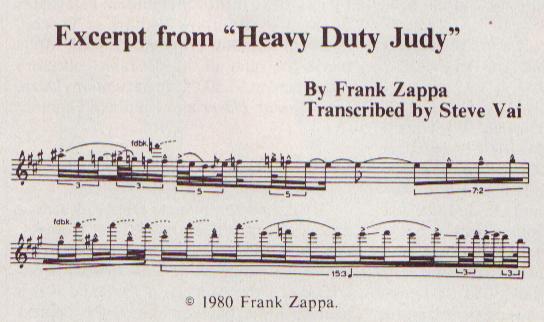
There are three or four bars at the very beginning before you hear a downbeat.
Right. And if you're oriented to 4/4 music, that's going to disturb you. But music doesn't always have to land on the downbeat of every bar. It's just totally unnecessary-there's no gold-plated rule anyplace in the universe saying that must occur. You can tap your foot to it, and you hear the harmonic rhythm – the harmonic line that keeps coming back-but the rhythmic line doesn't have to match it. There is such a thing as a hemiola, where you play across the bar. And we've got hemiolas to death, for days, in those three albums. But one other thing that you have to understand is that the style that I played on those albums was very heavily influenced by the fact that Vinnie Colaiuta is the drummer on those tapes. He can do all that stuff, and you can rely on him and know that he knows where he is, and he knows where he's going, and he will come back. He's not just piddling around out there. And unless you're playing with a drummer who understands that type of rhythm and can stretch it to the maxi, then you're not going to get the same effect. It's not just a matter of ignoring the downbeat; it's purposely and consciously going for things other than a downbeat. And I'm playing a totally different way now that I have another drummer in the band.
It would make a difference when you go outside if you know that your drummer will be able to hold the music together for you until you come back again.
Well, I try to let a musician play in the realm that he's most comfortable in, and I push them to the extent that they learn new things. But when it's an improvisational situation, you can't get blood out of a turnip; and if a guy just doesn't think in those realms, you can't make him think that way. And if he's a really good groove player, then it's foolish to twist his arm and make him play anything other than a style that he feels comfortable with. Otherwise, it's going to sound artificial. So. I have to adapt to the rhythm section that I'm playing with. It's much the same with bass players.
* * * *
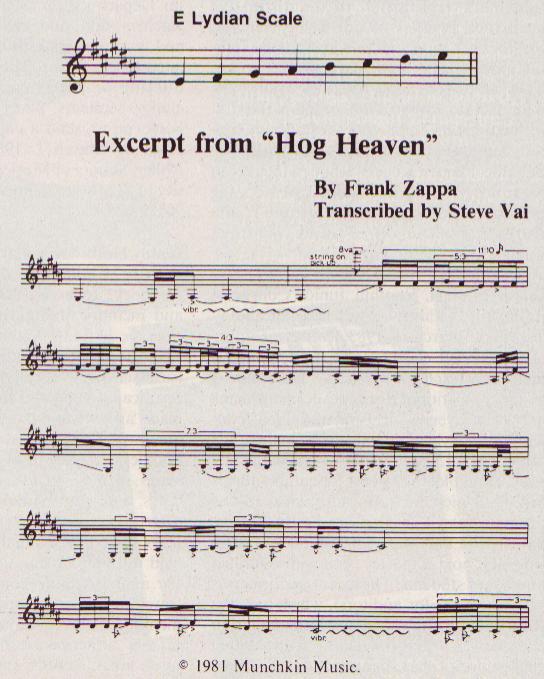
[Ed. Note: There was a musical mixup in the Dec. '82 column: The examples labeled "E Lydian Scale "and "Excerpt From Hog Heaven" were inadvertently switched with this month's examples from "Heavy Duty Judy." The correct examples for "Hog Heaven " are shown below. We apologize for any inconvenience this may have caused.]
Read by OCR software. If you spot errors, let me know afka (at) afka.net